

BUYING PROPERTY IN MEXICO
Escrow When Buying Property in Mexico: How Your Money Is Protected
When you're buying property in Mexico, one of the most important questions is simple:
Where does my money go before the property is legally transferred to me?
Professional escrow can provide a neutral way to hold earnest money and purchase funds until the conditions established in the transaction have been satisfied.
THE SHORT VERSION
What Is Escrow When Buying Property in Mexico?
Escrow is an arrangement in which a neutral third party holds buyer funds during a real estate transaction and releases those funds according to agreed written instructions.
The escrow provider is separate from the buyer and seller. Instead of sending an earnest-money deposit directly to the seller, the funds are held until the conditions for their release have been satisfied.
Unlike the highly standardized escrow systems familiar to many U.S. and Canadian buyers, Mexico does not have one uniform nationwide real-estate escrow system, and escrow is not legally required in every transaction. In Baja California Sur's international real-estate market, however, third-party escrow is commonly used to manage buyer deposits and closing funds.
In simple terms: escrow gives your money somewhere neutral to sit while everyone completes the work required to close the sale.
IMPORTANT DISTINCTION
Escrow and a Fideicomiso Do Completely Different Jobs
ESCROW
Holds money
Used during the transaction
Protects deposits and purchase funds
Funds are released according to escrow instructions
Normally ends after the transaction
FIDEICOMISO
Holds legal title through a trustee bank
Continues after closing
Provides the foreign buyer's ownership structure
Beneficiary rights are established in the trust
Typically continues for the trust term
Escrow protects the money. A fideicomiso establishes the ownership structure
BUYER PROTECTION
Why Is Escrow Important in a Mexico Real Estate Transaction?
Imagine you're purchasing a $425,000 USD home in La Paz. Your accepted offer requires a 10% earnest-money deposit.
That means you may be asked to send $42,500 USD before the final deed has been signed.
The important question is:
Who controls that $42,500 while the transaction is being completed?
With an independent escrow arrangement, the buyer's deposit is held separately and released according to the conditions set out in the escrow agreement. That helps create a clear process for both parties:
Buyer: demonstrates that the funds have been committed.
Seller: receives evidence that the buyer has deposited the agreed money.
Both parties: know the conditions governing when the funds may be released.
Professional escrow providers describe this neutral custody and written release process as the central function of escrow.
In simple terms: you want your deposit committed to the transaction without unnecessarily handing control of it directly to the seller before closing.
LEGAL REQUIREMENT VS. GOOD PRACTICE
Is Escrow Legally Required When Buying Property in Mexico?
Not necessarily. Mexico does not operate under one standardized national real estate escrow framework equivalent to what many buyers know from the United States or Canada, and third-party escrow is not legally mandatory for every Mexican property purchase.
That distinction is important: Not legally required does not mean not useful.
The purchase agreement matters.
If the parties agree that earnest money will be deposited into escrow, the contract should clearly establish:
Deposit amount
Deposit deadline
Escrow provider
Refund conditions
Release conditions
Default provisions
Closing instructions
STEP BY STEP
How Does Escrow Work in a Mexico Property Purchase?
STEP 1 - Offer Accepted
The buyer and seller agree on price and principal transaction terms.
STEP 2 - Escrow Agreement Established
The parties receive and execute the escrow agreement or instructions governing how the money will be held and released.
STEP 3 - Buyer Wires the Deposit
The buyer send the agreed earnest money directly to the escrow provider using verified wire instructions.
STEP 4 - Escrow Confirms Receipt
The parties receive confirmation that the funds have been received.
STEP 5 - Transaction Moves Forward
Due diligence, fideicomiso preparation, Notario work and closing preparation proceed.
STEP 6 - Final Purchase Funds Are Deposited
Depending on the structure of the transaction, additional purchase funds may be sent to escrow before closing.
STEP 7 - Closing Conditions Are Satisfied
The required documents, approvals and contractual conditions are completed.
STEP 8 - Funds Are Released
The escrow provider released the funds according to the signed instructions.
YOUR DEPOSIT
What Happens to My Earnest Money Deposit?
Your earnest-money deposit demonstrates that you are committed to completing the purchase under the terms of the agreement. Once deposited, what happens to that money depends on the actual contract and escrow instructions.
Possible outcomes include:
The purchase closes
The earnest money is generally credited toward the purchase price and released according to the closing instructions.
A valid contingency allows the buyer to terminate
The deposit may be refundable if the agreement specifically provides for that outcome and the buyer complies with the required procedures and deadlines.
The buyer defaults
Some or all of the deposit may become payable to the seller if the agreement establishes that consequence.
The seller defaults
The agreement may require the funds to be returned to the buyer and may establish additional remedies.
Never assume an earnest-money deposit is automatically refundable. The answer is found in the specific purchase agreement and escrow instructions.
In simple terms: before wiring the deposit, know exactly what has to happen for you to get it back, and what could cause you to lose it.
RELEASE OF FUNDS
Who Decides When the Money Leaves Escrow?
The escrow provider does not simply decide on its own that the seller should receive the money. Funds should be released according to the signed escrow instructions and transaction requirements.
Depending on the transaction, release may require:
Closing documents to be executed
Buyer approval
Seller approval
Instructions from the authorized closing professional
Satisfaction of contractual conditions
Delivery of specified documentation
Before wiring your deposit, ask:
"Exactly what written authorization or event allows these funds to be released?"
If the answer isn't clear, get clarification before sending the money.
KNOW THE DIFFERENCE
Why Not Just Send the Deposit Directly to the Seller?
Some Mexican real-estate transactions are structured with direct payments between the parties. That does not automatically mean the transaction is improper...but it does create a fundamentally different risk profile.
With third-party escrow:
Buyer
Escrow Provider
Seller
With direct payment:
Buyer
Seller
Once funds have already been transferred directly to the seller, recovering them after a contractual dispute can be considerably more complicated. For an international buyer, that difference deserves careful consideration before the payment structure is accepted.
Before making any direct payment to a seller, understand why the transaction is structured that way, what protections exist, and what the contract says will happen if the transaction does not close.
WHO DOES WHAT?
Escrow Provider vs. Notario Publico: Are They The Same?
No. These are separate roles.
This deserves another simple comparison:
ESCROW PROVIDER
Holds transaction funds
Follows escrow instructions
Confirms receipt of funds
Releases money when authorized
Financial custody role
NOTARIO PUBLICO
Formalizes the legal property transfer
Prepares/authorizes legal instruments
Reviews required property documentation
Coordinates taxes and registration requirements
Legal/public-function role
The escrow provider handles the money. The Notario handles the formal legal transfer.
WIRE SECURITY
Before You Wire Money: Verify the instructions
Real estate transactions involve large transfers, which makes wire instructions particularly sensitive. Never rely solely on an email telling you where to send tens or hundreds of thousands of dollars.
Before wiring funds:
Confirm the escrow company independently
Check that the beneficiary name matches your instructions
Verify bank details using a trusted contact
Be suspicious of last minute changes
Confirm receipt after the transfer
Save the wire confirmation

Dream Baja Realty regularly works with established third-party escrow providers that handle international real estate transactions in Baja California Sur. The provider we most commonly use is:

ESCROW COSTS
How Much Does Escrow Cost in Mexico?
Escrow fees vary depending on the provider, transaction value, number of deposits or disbursements, currency and complexity of the transaction. Your escrow fee should be confirmed directly with the provider handling your transaction.
As of 2026, escrow account fees in La Paz are roughly $650.00 USD or $13500 MXN
Who Pays the Escrow Fee?
There is no universal rule requiring the buyer or seller to pay the escrow fee in every transaction. In many international buyer transactions, the buyer pays the escrow expense, but responsibility should be clearly established prior to an offer being presented.
In simple terms: escrow is another transaction cost to budget for, but the exact amount and who pays it should be clear before you sign.
PRE-CONSTRUCTION BUYERS
Does Escrow Work Differently for Pre-Construction?
It can. With a typical resale, escrow funds may remain held until the transaction proceeds to closing. Pre-construction purchases can be different because the buyer may make multiple deposits or progress payments over an extended construction period, with multiple stages where portions of the funds are released to the builder or developer.
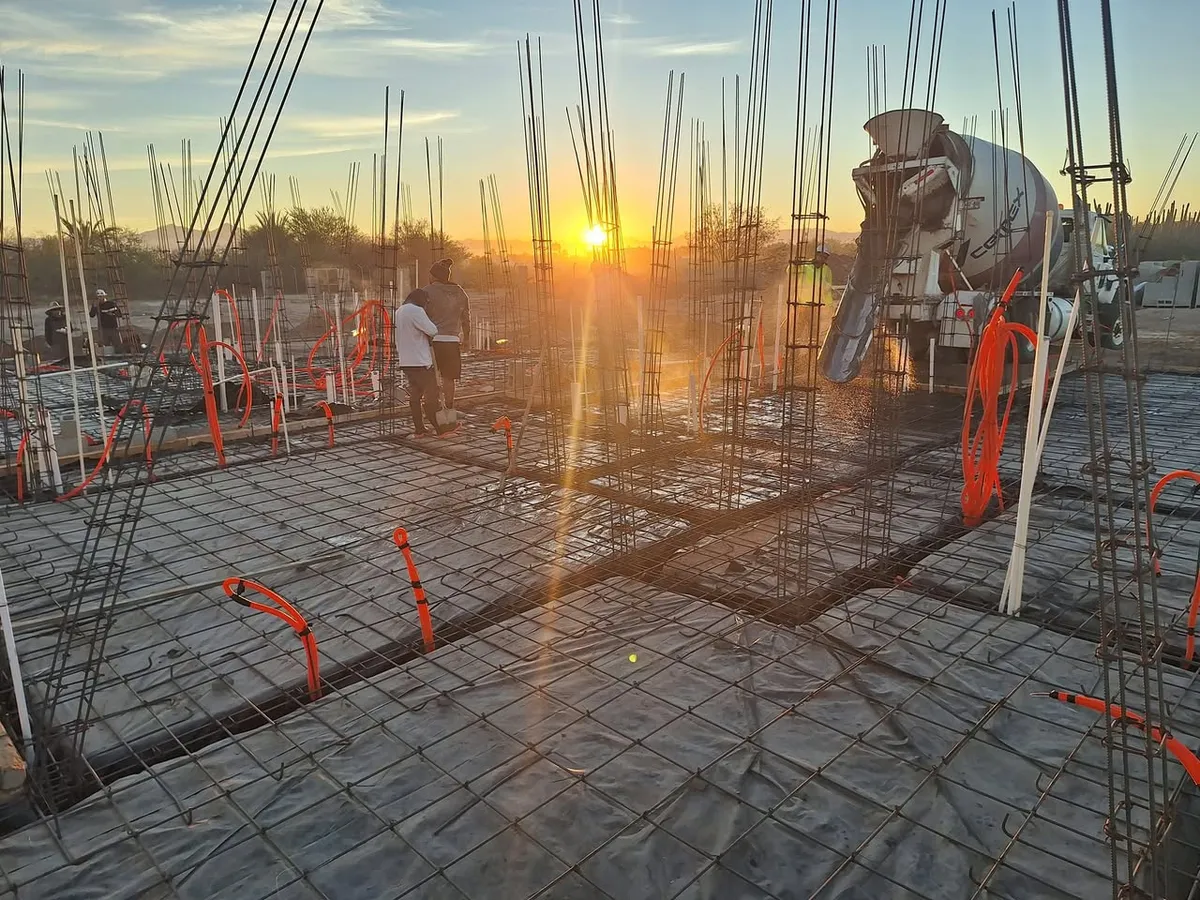
Before purchasing pre-construction, understad:
Where each deposit will be held
Whether deposits remain in escrow
Whether money is released to the developer during construction (this is common at various milestones of construction)
What milestones trigger a release
What happens if construction is delayed
What happens if the project is not completed
Whether buyer approval is required before a release
What remedies are available under the purchase contract
In simple terms: with pre-construction, don't just ask where the first deposit goes. Ask where your money will be at every stage before the property is delivered.
CANCELLATIONS & DISPUTES
What Happens to Escrow Funds if the Purchase Does Not Close?
The answer depends on why the transaction failed and what the signed contracts say. Escrow itself does not determine who is legally entitled to the money. The escrow provider follows the applicable written release instructions.
IF THE BUYER CANCELS UNDER A VALID CONTINGENCY
If the purchase agreement gives the buyer a contractual right to terminate and receive the deposit back, the escrow funds may be returned according to the agreed procedure.
IF THE BUYER DEFAULTS
If the buyer fails to perform and the contract provides that the seller is entitled to the earnest money, some or all of the deposit may be ultimately released to the seller.
IF THE SELLER DEFAULTS
The buyer may be entitled to return of the escrowed funds and potentially other remedies established in the purchase agreement
IF THE PARTIES DISAGREE
The escrow provider normally should not independently decide which party is legally correct. The parties may need to provide mutually executed instructions or resolve the dispute through whatever mechanism is established in the contracts and applicable law.
This is why your deposit language matters so much.
Before signing, understand:
When is the deposit refundable?
When does it become non-refundable?
Who authorizes release?
What happens if buyer and seller disagree?
In simple terms: escrow protects custody of the money. Your contract determines who may ultimately be entitled to it.
ESCROW FAQ
Frequently Asked Questions About Escrow in Mexico
Is escrow required when buying property in Mexico?
No. Third-party escrow is not legally required in every Mexican real estate transaction. However, it is commonly used in international property transactions in Baja California Sur because it provides a neutral mechanism for holding deposits and purchase funds until the agreed conditions for release have been satisfied.
The simple version: escrow may not be mandatory, but it can provide an important additional layer of protection.
Is escrow safe in Mexico?
The safety of an escrow arrangement depends on the provider, banking structure, written instructions and security procedures being used. Buyers should independently verify the escrow company and all wire instructions before transferring funds.
The simple version: don't trust the word "escrow" by itself... verify who is actually holding your money and under what rules.
Where is my escrow money held?
That depends on the escrow provider. Some international escrow companies handling Mexican real estate transactions use accounts at U.S. financial institutions. The buyer should confirm the specific banking arrangement directly with the provider before sending funds. Global Escrow Solutions, for example, currently states that escrowed funds are held through Bank of America and that its funds are bonded and insured.
The simple version: ask exactly which company and bank will be holding your money before you wire it.
Can the seller access my earnest money before closing?
Not simply because the seller asks for it. If funds are being held by an independent escrow provider, their release should follow the conditions and authorization process contained in the escrow agreement and instructions.
The simple version: the whole point of escrow is that the seller doesn't automatically control your deposit.
What happens to my deposit at closing?
If the transaction closes normally, the buyer's earnest money is generally credited toward the purchase price and disbursed according to the closing instructions.
The simple version: your deposit isn't an extra payment... it normally is credited towards the total purchase price of the property.
Can I get my deposit back if I change my mind?
Not necessarily. Whether your earnest-money deposit is refundable depends on the purchase agreement, contingencies, deadlines and reason for cancelation. Simply changing your mind does not automatically create a right to receive the deposit back.
The simple version: never wire earnest money until you understand exactly when it becomes non-refundable.
Can I send the entire purchase price to escrow?
Often, yes, depending on the provider and structure on the transaction. Some buyers deposit the initial earnest money first and send the remaining purchase funds closer to closing. The payment schedule should follow your contract and the escrow provider's instructions.
The simple version: escrow can hold more than just the initial deposit. In fact, in La Paz, closing is often not possible without proof that escrow is fully funded with the property purchase funds.
Can escrow hold Mexican pesos as well as U.S. Dollars?
This depends on the provider. Global Escrow Solutions, for example, can send funds in Mexican pesos and maintains a MXN account. Because currency conversion can affect the amount ultimately received, buyers should clarify the currency of the purchase price, escrow account and final disbursement before funding.
The simple version: know whether you're buying in dollars, pesos, or converting between the two before money starts moving.
Is the escrow company responsible for checking the property title?
Not necessarily. Escrow and title or legal due diligence are different functions. Title review, property documentation and the legal transfer are handled through the appropriate closing professionals and Notario process.
The simple version: escrow protects the money; it does not replace legal due diligence on the property.
Is escrow the same as a fideicomiso?
No. Escrow temporarily holds transaction funds. A fideicomiso is the trust structure commonly used by foreign individuals holding residential property within Mexico's restricted zone.
The simple version: escrow handles your money during the purchase; the fideicomiso helps establish your ownership rights after closing.
BUY WITH CONFIDENCE
Know Where Your Money Is Going Before You Send It
Buying a home in Mexico may involve wiring tens or hundreds of thousands of dollars across and international border.
You should understand:
Who is holding the funds
Where they are being held
When they can be released
What happens if the transaction doesn't close
How the wire instructions are verified

Dream Baja Realty helps buyers understand and coordinate the transaction from the accepted offer through escrow, due diligence, fideicomiso, Notario and closing.
CONTINUE YOUR RESEARCH
Understand Every Part of Your Mexico Property Purchase
Buying Property in Mexico: Step-by-Step
Follow the transaction from property search and offer through escrow, closing and registration.
Understanding the Fideicomiso
Learn how foreign buyers hold residential property within Mexico's restricted zone.
Mexico Property Closing Costs
Understand acquisition tax, Notario expenses, fideicomiso fees and total purchase budgeting.
What does a Notario Publico do?
Understand the legal professional responsible for formalizing your Mexican real estate transfer.
Dream Baja Realty
Calle Delfines 135
entre Mangle y Oceano Pacifico,
Col. Esperanza I, La Paz, 23090 Mexico
Limitation of Liability: Dream Baja Realty, is a real estate company that offers third party real estate, therefore all information published on this site, is deemed reliable but not guaranteed and should be verified with one of our advisers in order to confirm whether the advertised properties are subject to lease, sale, change or withdrawal. Dream Baja Realty will not be responsible for any typographical errors, misinformation, misprints and in no case be considered as misleading advertising or bad faith. Dream Baja Realty is a proud member of MLS BCS. Please enjoy this website advertising all brokerage members MLS listings for public review.
The offered price is in DOLLARS (US Currency) and in accordance with article 8 of the monetary law, the final price for recordation purposes will be converted into PESOS resulting from the official exchange rate on the date payment is due. Prices shown in DOLLARS can be converted into PESOS by accessing the following link and performing the corresponding arithmetic multiplication per the current exchange rate. https://www.banxico.org.mx/tipcamb/main.do?page=tip&idioma=en