
Your Complete Guide to Moving to Mexico

Relocate to Mexico and Find Your Dream Home

Everything you need to know — from the moment you consider the move to the day you hold your keys. Curated by licensed Mexican, American, and Canadian real estate professionals based in Baja California Sur.

AMPI MEMBER BROKERAGE

LICENSED BROKERAGE

FULL MLS ACCESS - EVERY PROPERTY IN BCS

BAJA CALIFORNIA SUR SPECIALISTS

EDUCATION-FIRST APPROACH

Step 01: Why Move to Mexico?

Millions of Americans and Canadians are reconsidering the cost of living back home. Mexico offers a compelling alternative - without giving up quality, safety, or connection

Cost of Living

Stretch Your Dollar Further

Most expats find they live significantly better in Mexico for 40-60% of what life costs in the US or Canada - including quality dining, healthcare, and housing.

  • World-class healthcare at a fraction of US costs

  • Property taxes often under $500 USD/year

  • No state income tax on foreign-source income in most cases

  • Fresh, local food markets year-round

Climate & Lifestyle

365 Days of Sun & Sea

Trade grey winters for outdoor living. Baja California Sur averages over 350 sunny days annually, with the Sea of Cortez on one side and the Pacific on the other.

  • World-class sport fishing, diving, and whale watching

  • Thriving expat communities with familiar amenities

  • Boutique restaurants, art galleries, and cultural festivals

  • Proximity - direct flights from major US & Canadian cities

Community & Safety

Welcoming, Connected & Surprisingly Safe

The expat communities of Baja California Sur - particularly La Paz, La Ventana, Todos Santos, and San Jose del Cabo - are tight-knit, vibrant, and well-established.

  • La Paz ranked among safest cities in Mexico

  • Active English-speaking expat groups and associations

  • Strong local arts and culinary scenes

  • Bilingual schools and international-standard medical care

Investment Potential

Property Values Are Rising - Act Now

BCS real estate is in an early appreciation cycle. Buyers entering today are capturing value before infrastructure buildout, direct flight expansion, and remote-worker demand push prices higher.

  • Short-term rental demand outpacing inventory

  • Pre-construction opportunities with strong ROI potential

  • Foreigners can legally own titled property via fideicomiso

  • Low holding costs and strong USD purchasing power.

Step 02: What Do I need to Do to Move to Mexico?

Moving to Mexico is more straightforward than most people expect - when you have the right guidance. Here's the practical roadmap, in order.
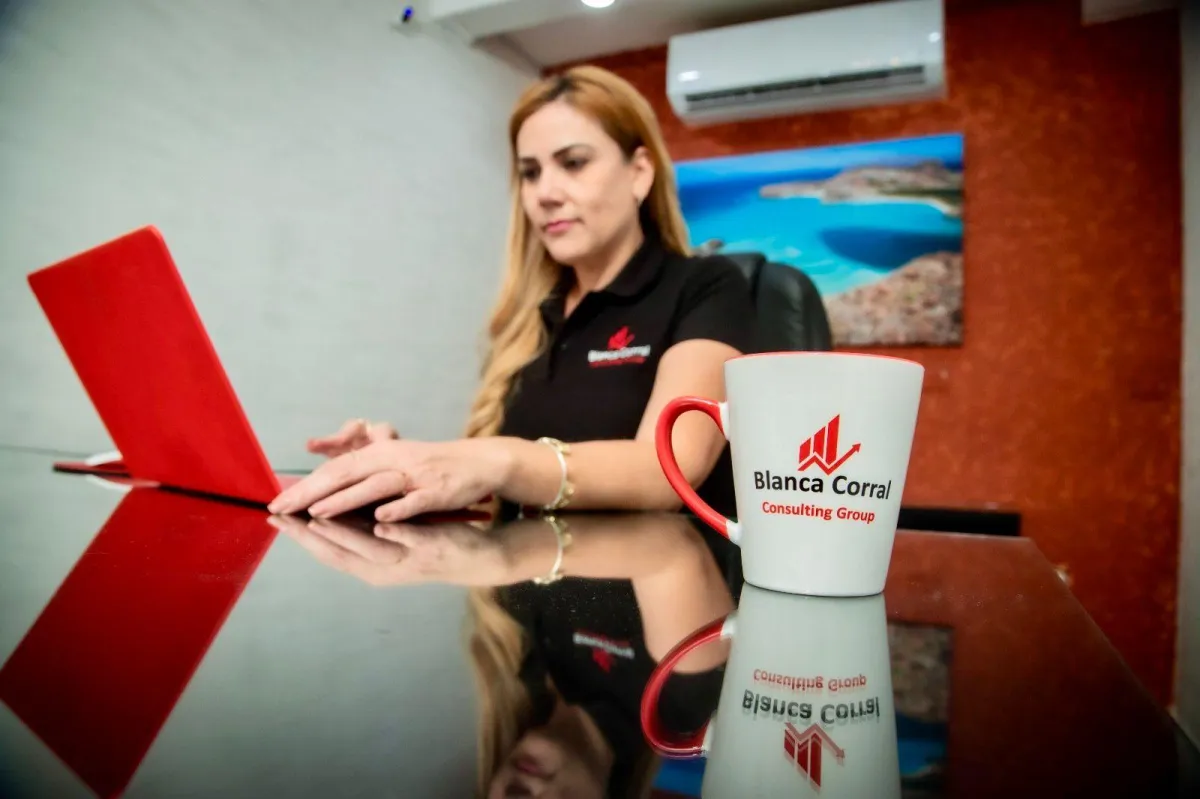
Using a good facilitator can the be the difference between frustration and success. We highly recommend Blanca Corral Consulting Group @ +52 612 108 5532

Immigration

Choose Your Visa Path

Mexico offers two primary legal residency options for North Americans. Most retirees and remote workers qualify quickly based on income or savings - the process is simpler than you think.

  • Temporary Resident (Residente Temporal) - Valid 1 year, renewable up to 4 years. Required income: approximately $2,100 USD/month or equivalent savings. *be sure to check the updated requirements at your closest Mexican Consultate.

  • Permanent Resident (Residente Permanente) - No renewal needed. Typically applied for after 4 years temporary, or immediately if retired with qualifying pension/income.

  • Apply at a Mexican consulate in your home country to start the process.

  • Once in Mexico, complete the process at INM (Immigration) in Baja California Sur.

Buying Property in BCS

The Foreigner's Buying Process

Foreigners can legally own property in the restricted zone (within 50km of the coast) through a bank trust called a fideicomiso - a well-established, fully legal structure protecting your ownership rights.

  • Search for property with a licensed AMPI/MLS agent

  • Make an offer and sign a purchase agreement (promissory contract)

  • Engage a closing attorney/Mexican notario publico for title search and closing

  • Your attorney/notario will set up fideicomiso through a Mexican bank (approx $500 USD/yr fee)

  • Close typically within 60-90 days

  • Budget 4-6% of the purchase price for closing costs.

Finances

Setting Up Your Money in Mexico

Banking and currency management are straightforward once you know the system. You don't NEED to have a Mexican bank account to buy property, but it makes life in Mexico much easier in relation to paying utilities, etc.

  • Open a Mexican bank account with your residency card

  • Use Wise or similar for international transfers

  • Most major purchases are USD-accepted in BCS

Practical Logistics when Moving to Mexico

What to Ship, What to Leave

Bringing belongings into Mexico is possible under a menaje de casa (household goods) permit tied to your immigration status.

  • Vehicles: if you have Temporary Residency, no TIP is required to bring your vehicle to BCS.

  • Pets: vet health certificate required at border

  • Electronics and furniture import: duty-free under residency program

  • Most expats find it less expensive to sell and rebuy locally
"The process felt overwhelming until we had the right people in our corner. Dream Baja Realty walked us through every step - from visa questions to closing on our La Paz condo."

- Mark & Susan T., California to La Paz 2025

Step 03: Where Should You Move to in Mexico?

Mexico is vast. The right destination depends on your lifestyle, budget, and goals. Here's our honest, agent's-eye guide - and why Baja California Sur consistently rises to the top.

Baja California Sur - Our Recommendation

The Right Peninsula at the Right Time

Baja California Sur checks boxes that other destinations can't. It's close enough to fly home to the USA or Canada in 4 hours or less, safe enough that expats feel at ease, and growing fast enough that buyers today are still getting in early.

Baja California Sur Properties...just a taste

Baja California Sur Investment Properties for Sale

The Ultimate Guide to Relocating to Mexico

Updated & Expanded - Including La Paz, Baja California Sur Real Estate Law

Excerpts from the new 2026 edition

The Ultimate Guide to Relocating to Mexico: 2026 Edition (A synopsis and summary)

Everything Americans and Canadians Need to Know Before Making the Move — From a Licensed Broker on the Ground in La Paz, Baja California Sur

By Ian Wilson | Licensed Real Estate Broker | AMPI Board Member, La Paz BCS | Co-Founder, Dream Baja Realty


Over a million Americans and Canadians now live in Mexico, at least part of the year. Every week, dozens more are seriously researching the move — scrolling forums, joining Facebook groups, watching YouTube videos from people who figured it out before them. If you're reading this, you're probably somewhere in that process.

This guide — now fully updated for 2026 — is my attempt to give you something better than a forum thread or a YouTube comment section. It's everything I know from years of helping buyers and relocators navigate Mexico's real estate market, immigration system, and daily life from my base in La Paz, Baja California Sur. I'm a formally licensed real estate broker operating under Mexican regulation, an AMPI Board Member for the municipality of La Paz, and someone who made this move myself in March 2020 and hasn't looked back since.

What's changed between the first edition of this guide in 2024 and this one: quite a lot. Mexico's residency income thresholds rose significantly and now use a new UMA-based calculation method. Immigration fees doubled effective January 2026. INSABI — the public health program I referenced in earlier editions — was dissolved and replaced by IMSS-Bienestar. Anti-money-laundering compliance requirements for real estate transactions tightened in mid-2025. Short-term rental regulations are evolving municipality by municipality. I've updated every relevant figure, law, and process description accordingly.

I've also added something new: a first-person story at the opening of each chapter, drawn from real conversations with real clients. They're designed to make the sometimes-dry legal and logistical content feel alive — and to dismantle the persistent myths about moving to Mexico that I hear constantly and that cost people time, money, and peace of mind.

Let's get into it.


About the Author: Ian Wilson and Dream Baja Realty

If you'd told me ten years ago that I'd be a licensed real estate broker in La Paz, Baja California Sur, sitting on the AMPI Board of Directors for the municipality, I would have looked at you with genuine confusion. My career had taken me from Victoria, British Columbia — where I grew up — to a starting role as a scuba diving instructor with Royal Caribbean at 24, to fifteen years of sales and marketing leadership for Royal Caribbean and Celebrity Cruises in Miami.

I moved to La Paz in March 2020. The pandemic had started, my parents were in Mexico, and the corner office in Miami suddenly felt like the wrong place to be. I arrived in Baja, fell in love with the city, sold my first property within a week, and have been here ever since.

Today I co-run Dream Baja Realty alongside Chanel Graham. We're one of very few formally licensed real estate brokerages operating under Mexican real estate regulation in La Paz, BCS — led by Americans and Canadians, compliant under Mexican law. Our team includes agents Saidee, Kelvin, Chris Eager, Chris Stickney, and Lynden McGee. We specialize in helping American and Canadian buyers, expats, investors, and relocators navigate the Baja California Sur market with full legal protection and no surprises.

My AMPI membership and formal broker licensing aren't just credentials on a wall. They represent legal accountability that protects every client we work with — and they're rarer than most people realize. Mexico doesn't require real estate licensing. Anyone can hand out a business card that says "agent." When it comes time to protect your investment, the difference between a licensed professional and an unlicensed one can cost you everything.

I live in La Paz with five rescue cats — Loki, Freya, Thor, Guapo, and Runa. I have always considered myself a dog person. The cats remain unconvinced.

Dream Baja Realty serves buyers, investors, and relocators across Baja California Sur, including La Paz, La Ventana, El Sargento, Todos Santos, El Pescadero, and the Los Cabos corridor. Book a free consultation at dreambajarealty.com.


Why Americans and Canadians Are Moving to Mexico

The numbers tell a clear story: over one million Americans and Canadians currently live in Mexico, and that number grows every year. The reasons vary by person — retirement, remote work, adventure, lower cost of living, better weather, proximity to family — but several themes come up consistently in the conversations I have with people considering the move.

Cost of living. Even in coastal cities like La Paz, the monthly expenses for a comfortable life run 40–60% less than comparable cities in the United States or Canada. Housing, healthcare, dining, and services all cost meaningfully less. The gap is widest for housing and healthcare, where the savings can be genuinely life-changing for retirees or people on fixed incomes.

Healthcare quality and affordability. The idea that Mexican healthcare is substandard is one of the most persistent myths in the expat community — and one of the most wrong. Mexico's private healthcare sector is staffed by internationally trained physicians, equipped with modern technology, and priced at a fraction of U.S. costs. A private specialist consultation in La Paz costs $30–$60 USD. A CT scan that might cost $4,000 USD in an American emergency room costs $250–$500 USD here. I have watched retired ER nurses from Seattle have their minds completely changed by a single hospital visit.

Climate and outdoor access. La Paz, Baja California Sur sits on the Sea of Cortez — what Jacques Cousteau called "the world's aquarium." Year-round sunshine, world-class diving and snorkeling, whale shark encounters from October through March, sea lion colonies at Isla Espíritu Santo (a UNESCO World Heritage Site accessible by a 40-minute boat ride), and more hiking, kayaking, and sailing than most people can fit into a week, let alone a life.

Community. The expat community across Mexico is large, well-organized, and genuinely welcoming. In La Paz specifically, it's close-knit without being overwhelming, and large enough to have real social infrastructure while small enough that you can actually know your neighbors.

Proximity to home. Mexico's geography means that even if you move to La Paz, you're roughly a four-hour flight from Los Angeles, a little over five from Vancouver, and reachable from most major American and Canadian cities without a layover. This matters enormously to people who have family they don't want to feel disconnected from.


Chapter 1: How to Obtain Residency in Mexico in 2026

The Border Run Myth — And Why It's Getting Dangerous

Every week I talk to someone who has been living in Mexico for months or years on a tourist visa, crossing the border every six months to reset the clock. They call it their "residency strategy." I call it a gamble with increasingly bad odds.

A Mexican tourist visa (FMM) allows you to stay in the country for up to 180 days. Crossing the border and re-entering does not grant you a new 180 days as a matter of law or policy — it is an informal tolerance that immigration officers can withdraw at any time, for any reason, for any traveler. And they do. Mexican immigration officers have access to your complete entry history. If you've been crossing every six months for two or three years, that pattern is visible on their screen the moment your passport goes under the scanner. Officers can ask where you live, how you support yourself, and why you keep coming back. If your answers don't satisfy them, they can deny your entry — not "try again later," but deny you entry. I've known people this happened to. They stood at a border crossing with their car, their belongings, and their dog, and were turned away.

Get the residency. The border run era has run its course.

Temporary Residency vs. Permanent Residency: Understanding the Difference

Mexico offers two main legal pathways for expats who want to live here long-term: Temporary Residency and Permanent Residency. Understanding the difference — and the current financial requirements for each — is essential before you start the application process.

Temporary Residency is designed for people planning to stay in Mexico for more than six months but who aren't yet ready to commit permanently. It's valid for one year initially, renewable annually, for up to four years. After four years of temporary residency, you can apply for permanent residency.

Benefits of temporary residency include the right to live in Mexico full-time, own property, open a Mexican bank account, access IMSS public healthcare, and import your household goods duty-free under the Menaje de Casa provision. Temporary residents can also bring a foreign vehicle into Mexico with a Temporary Import Permit (TIP) — though as I'll explain in the chapter on moving logistics, this works differently in Baja California Sur, where the Zona Libre rules apply.

Permanent Residency is the long-term solution for expats ready to commit to Mexico. It doesn't expire and doesn't need to be renewed. Permanent residents can work and run businesses without restrictions, access all public healthcare and social benefits, and apply for Mexican citizenship after five years of legal residency. After four years of temporary residency, the transition to permanent status is available without re-demonstrating income or savings — you only need to demonstrate economic solvency initially at the consulate stage.

The 2026 Financial Requirements: What You Actually Need

This is where most people's research goes wrong. The income requirements for Mexican residency are not what Facebook groups from 2021 say they are. Mexico changed its calculation method in July 2025, shifting from minimum-wage multiples to a metric called UMA (Unidad de Medida y Actualización). The UMA for 2026 is MXN $117.31 per day. The recalibration landed the thresholds significantly higher than people were used to.

For Temporary Residency in 2026:

  • Income pathway: approximately $4,300 USD/month, demonstrable via official bank statements or income documentation over the past six months. Some consulates apply slightly different exchange rates — the range across consulates is approximately $4,100–$4,500/month.

  • Savings pathway: approximately $130,000 USD maintained in your accounts for the past twelve months.

For Permanent Residency in 2026:

  • Income pathway: approximately $5,500 USD/month or above.

  • Savings pathway: approximately $220,000 USD maintained for twelve months.

  • Note: after completing four years of temporary residency, the financial demonstration requirement for converting to permanent status is waived.

I meet people every week who have heard "the income requirement is $2,000 or $3,000 a month." Those figures are from 2022. They are years out of date, and applying based on them will result in a rejected application. Always verify current requirements directly with the specific Mexican consulate you plan to apply through before preparing your documents.

2026 Immigration Fee Update: Immigration processing fees doubled effective January 1, 2026. A one-year temporary residency card now costs approximately 11,141 MXN — compared to roughly 5,500 MXN previously. The full journey from initial temporary residency application through permanent residency conversion — five years of fees — now costs approximately $2,700 USD per adult applicant, up from around $1,350. Family members sponsored by a primary resident receive a 50% discount on fees. Budget these costs into your relocation planning from the beginning.

What Income Counts Toward the Residency Threshold

A question I get constantly: what types of income does Mexico count toward the residency requirement? The good news is that the definition is reasonably broad.

Qualifying income includes Social Security payments, pension income from any source, investment distributions (dividends, interest, rental income from properties), and regular employment income. Lump-sum deposits or cryptocurrency balances typically do not count as "regular income" for the monthly threshold — consulates want to see a consistent monthly inflow, not a single large transfer.

For retirees whose monthly income doesn't quite reach the threshold on its own, combining documented monthly income with a savings balance can satisfy the requirement. For example, if your monthly income is $3,500 USD but the threshold is $4,300, demonstrating $130,000 in qualifying savings alongside your income record may still lead to approval depending on the consulate. Work with an immigration attorney or facilitator to structure your documentation correctly for your specific situation.

For investors: owning Mexican property valued above approximately $558,000 USD (40,000 times UMA 2026) can substitute for the income requirement for permanent residency. Structure this correctly with a licensed attorney.

The Step-by-Step Residency Application Process

Step 1: Apply at a Mexican Consulate in Your Home Country

The residency process must begin at a Mexican consulate abroad — not in Mexico. You cannot initiate a residency application from inside Mexico on a tourist visa. Schedule your consulate appointment well in advance: popular consulates in Los Angeles, Houston, Chicago, San Diego, and Vancouver regularly have wait times of six to eight weeks. Start gathering documents the moment you have a rough moving timeline in mind.

Step 2: Gather Your Financial Documentation

Bring certified bank statements, pension letters, Social Security award letters, or investment account statements. Documents must be official — stamped or certified by the issuing institution. Some consulates require certified translations into Spanish; others accept English documents. Formatting requirements vary by consulate, which is why it is essential to confirm specific requirements with your consulate before preparing your package — not based on what worked for someone else at a different consulate in a different year.

Step 3: Your Consulate Appointment

The appointment itself is typically straightforward if your documentation is in order. The officer reviews your materials, may ask questions about your income sources and plans in Mexico, and if approved, stamps a residency visa into your passport. This visa is valid for 180 days — it is your authorization to enter Mexico and complete the next steps, not your residency card.

Step 4: Enter Mexico and Visit INM Within 30 Days

After entering Mexico with your consulate visa, you have exactly 30 days to visit the Instituto Nacional de Migración (INM) office in your city to finalize your Tarjeta de Residente (residency card). In La Paz, the INM office is accessible and the process is manageable — but do not wait until day 28. The INM appointment itself takes additional time to schedule, and processing your card after the appointment can take several weeks to months depending on the office's volume.

Documents for your INM appointment: passport with the consulate-issued visa, proof of Mexican address (signed lease or utility bill), passport-sized photos per INM specifications, and additional forms available at the INM office.

Step 5: Collect Your Tarjeta de Residente

Once processed, your residency card will be ready for collection at the INM. Carry it with you at all times — it is your legal identification document for all purposes in Mexico.

Using a Facilitator: The Most Underused Resource in the Process

A facilitator — known in Mexico as a gestor — is a professional whose job is to help expats navigate bureaucratic processes. They attend your INM appointment with you, know which forms to bring, speak with the officer when the Spanish gets technical, and make sure you don't accidentally restart the process because you used the wrong entry stamp or brought an uncertified copy when a certified one was required.

A good facilitator charges a few hundred dollars for their INM assistance services. They are worth several times that in reduced stress, saved time, and avoided mistakes. I maintain a referral list of trusted facilitators in La Paz — ask me directly if you need one.

Residency for Retirees: Social Security, Pensions, and the Qualifying Income Question

Residency for retirees on fixed incomes is one of the most common situations I help navigate. Social Security payments, pension income from public or private sources, military retirement pay, and regular investment distributions all qualify as income for residency purposes. If your combined income sources clearly exceed the threshold, the documentation is straightforward. If you're close to the threshold, work with a facilitator or immigration attorney to present your financial picture most effectively.

The good news for many retirees: after four years of annual renewal, the conversion to permanent residency removes the ongoing income demonstration requirement. Once you're a permanent resident, your financial situation is no longer subject to periodic review.


Chapter 2: Healthcare in Mexico for Expats — The Real Story

The $420 CT Scan

Sandra was a retired ER nurse from Seattle — twenty-five years in emergency medicine, genuinely unimpressible when it came to hospitals. When her husband Dave had a kidney stone episode two weeks after they arrived in La Paz, she drove him to Centro de Especialidades Médicas Fidepaz — La Paz's top private hospital — mentally preparing for what she assumed would be chaos.

They were seen within thirty minutes. The doctor spoke fluent English. The CT scan was done on-site. Dave was diagnosed, treated, and discharged the same afternoon. The total bill: $420 USD.

Sandra called me that evening. "I've been in American ERs where a CT scan alone is four thousand dollars," she said. "How is this possible?"

It's possible because Mexico's private healthcare sector operates under a fundamentally different cost structure — not because quality has been sacrificed, but because the billing architecture, administrative overhead, and malpractice insurance model are completely different from the American system. The doctors trained at the same international institutions, use the same equipment, and often have comparable or better clinical outcomes. They just don't carry the same overhead.

I get a version of that phone call from expats about once a month. It is one of my favourite conversations to have.

Debunking the Healthcare Myth

The idea that healthcare in Mexico is substandard — something you'd only use in a true emergency and only if the border was too far to reach — is one of the most persistent and most damaging myths in the expat community. It keeps people from making the move, and it keeps people who've already moved from accessing care they need because they're planning to "wait until they go back to the States."

Mexico ranks among the world's top medical tourism destinations. Millions of Americans and Canadians cross the border specifically for dental work, orthopedic procedures, cosmetic surgery, and complex diagnostics every year — not because they can't access American care, but because comparable quality is available at 20–30% of the cost. A major surgery that might cost $50,000–$80,000 USD in the United States can often be performed at facilities like Fidepaz in La Paz for $5,000–$15,000 USD at clinically comparable standards.

The 2026 Public Healthcare Update: INSABI is Gone

If you've been reading older content about Mexican healthcare for expats, you've probably encountered INSABI — the Instituto de Salud para el Bienestar. I need to update you: INSABI was dissolved and absorbed into a new program called IMSS-Bienestar in 2023/2024. IMSS-Bienestar provides basic healthcare services to uninsured, low-income Mexican residents through the IMSS infrastructure. It is not a meaningful pathway for expats seeking healthcare coverage. Any guide still recommending INSABI as an active option is working from outdated information.

IMSS: The Public Option for Expats with Residency

IMSS — Instituto Mexicano del Seguro Social — is Mexico's social security healthcare system. Expats with temporary or permanent residency can enroll voluntarily by paying an annual premium to their local IMSS office. Coverage is comprehensive: preventive care, doctor visits, hospital stays, surgeries, and medications.

Annual voluntary IMSS enrollment costs approximately $400–$500 USD for younger adults, rising to $700–$1,000 USD per year for those in their 60s. In La Paz, IMSS facilities provide solid routine and emergency care, though English is rarely spoken and wait times can be long for non-urgent appointments. Most expats I work with use IMSS as a safety net while maintaining a private plan for specialist access, shorter wait times, and English-speaking physicians.

The enrollment process is conducted entirely in Spanish. Bring a facilitator or Spanish-speaking friend to your first visit.

Private Healthcare in La Paz: What to Expect

For most expats in La Paz, private healthcare is the day-to-day reality, and it is genuinely excellent.

Centro de Especialidades Médicas Fidepaz is La Paz's top private hospital. It offers specialist departments covering most major disciplines, on-site imaging (CT, MRI, X-ray, ultrasound), a modern emergency department, and English-speaking physicians — particularly common in specialist and emergency roles. It is, by any standard, a real hospital with real capabilities.

Hospital General de Especialidades Juan María de Salvatierra provides additional specialist capacity, particularly for complex surgical cases.

Private clinics throughout the city offer routine care, specialist appointments, and outpatient procedures at even lower price points than the main hospitals.

A private specialist consultation in La Paz costs $30–$60 USD — paid directly at the clinic, no insurance claims, no deductibles, no surprise billing six weeks later. It is the aspect of healthcare in Mexico that most consistently surprises new arrivals.

The Farmacia Consultation: A Thing That Exists and Is Wonderful

At most Farmacias Similares and Farmacias del Doctor locations — which are everywhere in La Paz — there is a small consultation room attached to the pharmacy. You walk in with no appointment. A doctor sees you. You pay $3–$5 USD. If you need a prescription, they write it. You fill it at the pharmacy counter before you leave.

I have personally used this service for a minor respiratory infection. From walking in to walking out with medication in hand: eighteen minutes. Total cost: about $12 USD. There is genuinely no equivalent in North American healthcare, and once you've experienced it, you understand why expats in Mexico stop catastrophizing about minor illnesses.

Health Insurance Options for Expats in Mexico

Local private health insurance from Mexican providers — GNP Seguros, MetLife Mexico, AXA Seguros Mexico — covers private hospital stays, specialist visits, emergency care, and routine care. Monthly premiums run $50–$200 USD per individual depending on age and coverage level. For full-time La Paz residents who don't travel internationally frequently, this is typically the most cost-effective option.

International health insurance from providers like Cigna Global, AXA Global Healthcare, or Allianz Worldwide Care covers you in both Mexico and your home country. Monthly premiums run $300–$800 USD — higher, but it travels with you if you split time between countries.

The belt-and-suspenders approach — IMSS voluntary enrollment plus a local private plan — gives you comprehensive public-system access and private hospital access for approximately $1,000–$2,700 USD per person per year. This is the most common structure among full-time La Paz expat residents.

One critical note: your U.S. or Canadian health insurance almost certainly does not cover you in Mexico for non-emergency care, and may not cover emergencies either. Do not assume. Confirm with your insurer before you arrive, and arrange appropriate Mexican coverage before you need it.

Dental Care: Why Expats Schedule Trips Around It

Dental care in Mexico deserves its own section because it is so dramatically different from U.S. pricing that it genuinely changes people's financial planning.

A single crown in La Paz costs $200–$400 USD. The same crown in most American cities costs $1,200–$2,000. A full set of dental implants that might run $40,000–$60,000 in the United States can be completed at a reputable La Paz clinic for $10,000–$18,000 — often by a dentist who trained or completed fellowship work at an American or European institution.

Expats who come to La Paz for scouting trips regularly schedule dental work during the visit — flights, accommodation, a week of excellent meals and diving, and a complete course of dental treatment combined still cost less than the dental work alone would have cost at home.

Healthcare Resources in La Paz

Emergency services: call 911 (this is Mexico's unified emergency number, covering police, fire, and medical — same as the U.S. and Canada).

For specialist referrals, the La Paz Gringos and La Paz Community Facebook groups maintain active recommendation threads with current expat reviews of local physicians and dentists. Personal referrals from the expat community are more reliable than directory listings, which can lag actual availability.


Chapter 3: Cost of Living in Mexico — What Americans and Canadians Actually Spend

Reality Check: What Mexico Costs in 2026

Mexico is genuinely affordable relative to the United States and Canada. A lifestyle in La Paz that would cost $6,000–$8,000/month in coastal California or British Columbia often costs $2,500–$3,500/month here. That gap is real, it's sustained, and it represents a meaningful improvement in financial quality of life for most people who make the move.

What Mexico is not: uniformly cheap in the way that internet forums from 2019 suggest. The "$1,500/month lifestyle" that circulates endlessly in expat groups describes a specific life — typically a single person, in an interior city, renting a basic unfurnished apartment, cooking almost all their meals, and not running air conditioning. For a couple living a comfortable coastal life in La Paz — a two-bedroom home, air conditioning from May through October, dining out a few nights a week, owning a car, carrying health insurance — the honest number is $2,500–$3,500/month.

That's still an enormous savings compared to the alternative. It just isn't $1,500.

Housing Costs in Mexico: Renting vs. Buying

Renting in La Paz, Baja California Sur

Current long-term rental data from active listings in La Paz puts median one-bedroom rents at approximately $807 USD/month, with a realistic range of $700–$1,100 for a comfortable furnished one-bedroom depending on neighbourhood and proximity to the malecón. Two-bedroom homes — the most common choice for relocating couples — sit at a median of $1,485 USD/month, with well-located furnished options running $1,200–$1,800. Three-bedroom homes with gardens or rooftop terraces: $2,400–$3,200/month.

Electricity deserves special mention because it consistently surprises people who haven't planned for it. La Paz is hot from May through October — genuinely hot, in a way that makes air conditioning non-optional for most people. Running AC during those months adds $80–$150 USD to your monthly electricity bill depending on how many rooms you're cooling and how aggressively you run it. Some long-term residents have installed solar panels, which pay back reasonably quickly given the relentless sunshine and eliminate the seasonal spike.

Renting in Other Baja California Sur Communities

La Ventana and El Sargento (45 minutes south of La Paz) offer lower rents, particularly in the off-season. Basic casitas with beach access start around $500 USD/month, one-bedrooms run $700–$1,000, and two-bedrooms run $900–$1,400. The significant caveat is seasonality — during kite season (November through April), rents run 20–40% higher, and some property owners prefer season-long commitments rather than month-to-month arrangements.

Todos Santos rents at a premium over La Paz. One-bedroom casitas in Las Brisas and similar neighbourhoods run $900–$1,200/month. Well-appointed historic-centre properties run $1,200–$1,600. Two-bedroom houses with character: $1,600–$2,400. This is the price of living in a Pueblo Mágico with a thriving international community and exceptional food.

Cabo San Lucas is the most expensive rental market in BCS. Current market data from April 2026 puts the expat rental range at approximately $1,675–$3,070 USD/month for furnished apartments in desirable areas. Rents increased 9% between early 2025 and early 2026 — above the national rate of inflation. HOA fees in gated developments add $200–$2,000/month on top of rent, with most mid-range gated communities running $300–$600/month.

San José del Cabo runs 10–20% less than Cabo San Lucas for comparable properties, with one-bedrooms available from $900–$1,500 USD/month furnished and two-bedrooms running $1,400–$2,200.

Buying Property in Mexico: Price Ranges by Location

In La Paz, a comfortable two- or three-bedroom home can be purchased for $250,000–$450,000 USD — significantly less than comparable coastal properties in California or British Columbia. New-construction developments in La Paz's growing neighbourhoods have brought two-bedroom condos with rooftop decks and shared pools to market starting at $150,000–$200,000 USD at the right entry points.

All coastal property purchases by foreign buyers require a fideicomiso (bank trust structure) under Article 27 of the Mexican Constitution. I cover this in full in the real estate chapter below.

Monthly Living Expenses in La Paz: A Realistic Breakdown

Beyond rent, here is what a couple living in La Paz can expect to spend in 2026:

Water runs $5–$15/month. Propane gas for cooking runs $10–$25/month. Internet — 50 to 200 Mbps fibre is widely available — costs $25–$45/month. Mobile phone service on a postpaid plan runs $20–$40/month per line. Groceries for two people shopping primarily at local markets and the Mercado Municipal cost $280–$420/month. Dining out two to three nights a week for two costs $150–$260/month, with casual local restaurants running $10–$18 for a full meal and mid-range restaurants with drinks running $30–$55 for two. A car — insurance, fuel, and averaged maintenance — adds $250–$380/month. Private health insurance for two runs $150–$250/month.

Full monthly totals, realistically:

  • Single person, one-bedroom, comfortable: $1,700–$2,200/month

  • Couple, two-bedroom near water: $2,500–$3,500/month

  • Family of four with private school: $4,500–$6,500/month

Tax Considerations for U.S. and Canadian Expats

For Americans: The U.S. taxes its citizens on worldwide income regardless of where they live. You must file a U.S. tax return every year, even from Mexico. The Foreign Earned Income Exclusion (FEIE) for 2026 allows U.S. citizens living abroad to exclude approximately $126,500 USD in foreign-earned income from federal taxes. The Foreign Tax Credit is additionally available to offset Mexican taxes paid against U.S. tax liability. Hire a tax professional who specializes in expat taxation — this is not a situation where general tax software handles everything correctly.

For Canadians: Canadian citizens deemed non-residents for tax purposes pay Canadian tax only on Canadian-source income. You must file a departure return when you leave Canada. The Canada-Mexico tax treaty prevents double taxation. Work with a cross-border tax professional to structure your departure correctly and minimize your ongoing obligations.

Mexican tax residency: You become a Mexican tax resident if you spend more than 183 days in Mexico in a calendar year, or if Mexico becomes your primary center of vital interests. Mexican tax residents pay Mexican income tax on worldwide income at progressive rates of 1.92%–35%. Non-residents pay only on Mexican-source income (like rental income from a Mexican property). If you're generating rental income from a La Paz property, you must register an RFC (Mexican tax ID) with SAT and file declarations accordingly.

Cost of Living Spotlight: Why La Paz Offers the Best Value in Coastal BCS

La Paz sits in a particular sweet spot among Mexico's coastal destinations. It's the capital of Baja California Sur, which means full city infrastructure — real hospitals, international schools, banks, government services, commercial amenities. It has the Sea of Cortez directly on its doorstep, world-class diving and outdoor recreation, and a growing but not yet overcrowded expat community.

What it lacks: resort-town pricing. La Paz does not add a tourist markup to its daily life. Groceries, services, restaurants, and rentals are priced for the city's actual residents — Mexican families and long-term expats alike — not for visitors on ten-day resort stays. That distinction, in practice, saves a comfortable La Paz couple $800–$1,500/month compared to living the equivalent lifestyle in Cabo San Lucas or a resort-anchored Pacific coast town.


Chapter 4: Best Places to Live in Mexico for Expats

La Paz vs. Cabo: Why I Live Where I Live

"We almost went to Cabo," is a sentence I've heard from dozens of people who ended up in La Paz and are grateful for it. Jennifer and her partner Greg spent three days touring Los Cabos before driving north to La Paz, originally just to compare. That was eight months before she told me the story. They never went back to Cabo.

"Cabo is beautiful," she said. "But we felt like we were on vacation. Everything was priced for tourists. There were so many resorts it felt like Cancún, not Baja."

La Paz hit differently. The malecón at sunset. The old town with its painted buildings and unhurried pace. The dolphins in the harbour on a Tuesday morning. The fact that their neighbours knew their names after a week. "This feels like a real town where real people live," Greg told her. Not a resort that happens to have housing.

I chose La Paz in 2020 and have had five years to reconsider that choice. I haven't reconsidered it once.

La Paz, Baja California Sur

La Paz is the capital of Baja California Sur, a city of approximately 280,000 people on the western shore of the Sea of Cortez. It is consistently ranked among Mexico's five safest beach cities — statistically safer than the majority of major American and Canadian cities. It has a UNESCO World Heritage Site (Isla Espíritu Santo) accessible by a 40-minute boat ride, year-round whale shark encounters from October through March, world-class diving and kayaking, and a cultural and culinary scene that punches significantly above its size.

For expats, La Paz offers the full package: real hospital infrastructure, international bilingual schools, a developed banking and commercial sector, reliable high-speed internet, and a growing expat community that hasn't yet overtaken the city's authentic Mexican character. Property values remain attractively priced relative to coastal markets in California or Canada, and the city's growth trajectory points toward increasing demand.

Dream Baja Realty specializes in the La Paz market. I'd encourage you to reach out for current inventory, neighbourhood guidance, and market analysis.

La Ventana and El Sargento

La Ventana and El Sargento sit 45 minutes south of La Paz on the Sea of Cortez, sharing a single bay that runs approximately six miles from north to south. They are the world's most reliably wind-consistent kiteboarding destination in the northern hemisphere, and the community that has grown around that distinction is one of the most eclectic and welcoming collections of people I've encountered anywhere.

From November through April, the bay fills with kiteboarders, windsurfers, wingfoilers, and the broader community they attract — yoga teachers, musicians, chefs, retired Canadians who've been coming for twenty years, remote workers who figured out that fibre internet reaches here just fine. The social density of season is unlike anywhere else in Baja.

In summer, the towns become much quieter. Year-round life here is viable but requires comfort with the off-season rhythm. La Paz is 45 minutes away for anything the village doesn't have.

For buyers: the market has developed substantially in recent years, with condo projects, established homes, and some land opportunities. Prices remain accessible relative to comparable beach communities elsewhere in Baja, and the seasonal rental income during the kiteboarding season is meaningful.

Todos Santos

Todos Santos is a Pueblo Mágico — officially designated by the Mexican government for its cultural and historical significance — on the Pacific coast of BCS, about 45 minutes north of Cabo and an hour south of La Paz. Population roughly 17,000, with a growing layer of international expats who've found in it a combination of arts culture, exceptional food, Pacific access, and a pace of life that the larger resort towns can no longer offer.

The town has been "discovered" — this is no secret gem. Americans and Canadians have been arriving in increasing numbers since roughly 2015, and the rental and property market reflects it. But Todos Santos maintains a dual identity — agricultural community and arts destination — that keeps it from feeling like a themed experience. It's a real town that happens to have exceptional galleries and farm-to-table restaurants.

The trade-offs: no major hospital (Cabo or La Paz for serious care), limited commercial infrastructure, higher rental prices than La Paz. The rewards: aesthetic quality of daily life that's difficult to put a price on.

El Pescadero

El Pescadero sits about 10 minutes south of Todos Santos on the Pacific coast. It doesn't have Todos Santos' designation or its arts infrastructure. What it has is Los Cerritos — one of the most consistently beautiful surf beaches in all of Baja — excellent farm-to-table food that directly reflects the town's agricultural heritage, and a price-to-Pacific-access ratio that still offers genuine value.

The rental and property market here is less developed than Todos Santos, which is both the risk and the opportunity. Entry-level land and property prices remain accessible, and the quality of daily life — particularly the food and the beach — is exceptional relative to cost.

Infrastructure trade-offs: water supply varies (some properties use trucked water — verify before purchasing), internet access is improving but not universally reliable, and medical care requires a drive to Cabo or La Paz.

Mérida, Yucatán

Consistently ranked among the safest cities in Latin America, Mérida combines colonial architecture, a strong cultural calendar, an extremely welcoming expat community, and one of the best cost-of-living profiles in Mexico. The Yucatán Peninsula's beaches at Progreso and Celestún are a short drive away. Medical infrastructure is well-developed. Cost of living is moderate to low — a comfortable couple's budget runs $1,800–$2,800/month.

Mérida appeals strongly to expats who want cultural richness and city-level infrastructure without coastal resort pricing. It lacks beach access in the immediate city, but makes up for it with the deepest local cultural scene of any mid-sized Mexican city.

Puerto Vallarta, Jalisco

Puerto Vallarta offers one of Mexico's most developed expat ecosystems: international schools, bilingual healthcare, established social networks, and a vibrant arts and restaurant scene in the Zona Romántica. Beach access is excellent. The expat community is large, organized, and active.

Housing costs more here than in La Paz or Mérida — still far below comparable coastal U.S. cities, but the gap has narrowed in recent years as the city's popularity has driven prices upward. A couple's budget in a good Puerto Vallarta neighbourhood runs $3,000–$5,000/month for a comfortable life.

San Miguel de Allende, Guanajuato

San Miguel de Allende is Mexico's most famous expat destination for artists, writers, and retirees. UNESCO World Heritage designation, spectacular colonial architecture, a dense arts calendar, and one of the largest and most organized expat communities in Mexico. One significant trade-off: it's landlocked, which matters enormously to buyers drawn to Mexico by coastal access.

Mexico City

For professionals, entrepreneurs, and younger expats, Mexico City offers cosmopolitan infrastructure that rivals any global capital: world-class dining, museums, galleries, and healthcare. The most developed healthcare infrastructure in the country. Neighbourhoods like Roma, Condesa, and Polanco have distinct personalities and strong international communities. Cost of living in desirable areas has risen significantly in recent years, partly driven by the influx of American and Canadian remote workers.


Chapter 5: Navigating Real Estate Laws in Mexico — What Every Foreign Buyer Must Know

The AMPI Licensing Question That Saved Robert $15,000 (And Then Some)

Robert called me on a Sunday. He'd been talking to a man he'd met at a bar in Cabo who offered to save him $15,000 in agent commissions by handling a property transaction directly. The man had business cards. He mentioned AMPI.

"Does he have an AMPI license?" I asked.

Silence. "He said he was a member."

"Being a member and being licensed are different things. Mexico doesn't require licensing to sell real estate. Anyone can call themselves an agent. But AMPI membership — and specifically formal licensing — establishes legal and ethical accountability that protects you."

Robert worked with my team instead. The deal closed cleanly. He got the property at fair market value with full legal protection. The man from the bar, it turned out, had no formal credentials at all.

There are wonderful, honest agents in Mexico who happen not to hold formal licenses. There are also unlicensed agents who will cost you everything. You cannot tell the difference from a business card.

The Restricted Zone and Article 27: What Foreigners Can and Cannot Do

The most important legal reality for Americans and Canadians buying property in Mexico is the restricted zone.

Article 27 of the Mexican Constitution prohibits foreigners from directly owning land within 50 kilometres (31 miles) of the coastline and 100 kilometres (62 miles) of international borders. This restriction covers virtually all of the coastal destinations where Americans and Canadians want to buy: La Paz, all of Los Cabos, Puerto Vallarta, Playa del Carmen, Cancún, and every other Mexican beach town.

The key word is "directly." Mexico solved this problem decades ago with the fideicomiso.

What Is a Fideicomiso? The Bank Trust Explained Simply

A fideicomiso is a trust agreement established with a Mexican bank. The bank holds technical legal title to the property as trustee. The foreign buyer is the named beneficiary of the trust, retaining full practical ownership rights: the right to use the property, rent it, renovate it, sell it, pass it to named heirs, or convert it.

This is not a situation where the bank owns your property and you're a glorified renter. The bank cannot sell your property without your consent, cannot occupy it, and derives no economic benefit from it. You, as the beneficiary, have complete control. The fideicomiso has been in continuous operation since the 1970s and has facilitated hundreds of thousands of successful foreign property purchases across Mexico.

Key facts about the fideicomiso:

  • Initial term of 50 years, renewable indefinitely

  • Named substitute beneficiaries can inherit the property directly without going through Mexican probate

  • Mexico imposes no inheritance tax on real estate transferred through a fideicomiso

  • Setup costs in 2026 range from approximately $2,000–$3,500 USD (higher than older guides suggest — budget accordingly)

  • Annual trust maintenance fees: $350–$650 USD/year

  • Major Mexican banks operating active trust departments: BBVA, HSBC, Scotiabank, Banorte

The 2026 AML Update: Under Mexico's Federal Law for the Prevention and Identification of Transactions with Resources of Illicit Origin (LFPIORPI), real estate transactions are classified as "vulnerable activities" subject to anti-money-laundering compliance requirements. Reforms in mid-2025 increased penalties for non-compliance. All parties to a transaction — buyers, sellers, agents, and developers — must provide government-issued ID, proof of funds, and KYC documentation. This is not optional, not negotiable, and applies to every transaction regardless of nationality. A licensed, compliant broker and a competent notario will guide you through this properly. An unlicensed agent cannot.

Property Outside the Restricted Zone

Foreign buyers purchasing property outside the restricted zone — in inland cities like San Miguel de Allende, Guadalajara, or portions of Mexico City — can hold title directly in their names, just as Mexican citizens would. This requires only a routine permit from the Secretaría de Relaciones Exteriores (SRE) pledging to abide by Mexican law. No fideicomiso is required outside the restricted zone.

The Notario Público: Mexico's Most Important Real Estate Figure

Every real estate transaction in Mexico must be finalized by a Notario Público. This is not a notary in the American or Canadian sense — a Notario Público is a government-appointed legal authority who has completed a law degree and rigorous state examinations. Their role is far more comprehensive than simple signature witnessing.

The Notario verifies that the seller has clean legal title. They confirm there are no liens, debts, or legal disputes attached to the property. They oversee the fideicomiso establishment if applicable. They calculate and collect all applicable taxes, including the acquisition tax (ISAI). They draft the public deed (escritura pública) that officially transfers ownership. They register the completed transaction with the Public Registry of Property.

Notario fees typically run 1%–2% of the purchase price. Their role is non-negotiable in any Mexican real estate transaction, and choosing a Notario who has experience with foreign buyers and fideicomiso transactions is important.

Closing Costs in Mexico: Budget 5%–10% of Purchase Price

This is one of the most consistently underestimated aspects of buying property in Mexico. In addition to the purchase price itself, budget 5%–10% in closing costs. On a $350,000 USD property, that's $17,500–$35,000 in additional costs. Being surprised by these at the closing table is avoidable — a good agent will walk you through a complete closing cost estimate before you make an offer.

The components:

  • Acquisition Tax (ISAI): approximately 2%–3% of purchase price in La Paz municipality

  • Notario Público fees: 1%–2% of purchase price

  • Property appraisal (avalúo): $200–$500 USD

  • Title search and certification: $200–$500 USD

  • Property registration fee: 0.5%–1% of purchase price

  • Legal fees (real estate attorney): $1,000–$3,000 USD

  • Fideicomiso setup (if applicable): $2,000–$3,500 USD

  • Annual fideicomiso maintenance going forward: $350–$650 USD/year

The Step-by-Step Property Purchase Process in Mexico

Step 1: Find a licensed, credentialed agent. Work with an AMPI-licensed professional who holds formal broker credentials under Mexican real estate regulation — not just AMPI membership. Ask directly. Verify. In La Paz, my team at Dream Baja Realty serves this role for American and Canadian buyers with full legal compliance.

Step 2: Property search and comparative market analysis. A competent agent conducts a CMA before you make an offer to ensure you're paying fair market value. This is a standard part of our process at Dream Baja Realty and should be a standard part of any professional engagement.

Step 3: Make a properly drafted offer. In La Paz, a well-drafted offer to purchase typically replaces the need for a separate preliminary purchase contract. The offer establishes price, inclusions, the due diligence period, and any contingencies. Your agent should draft this with precision.

Step 4: Due diligence period. Typically 15–30 days. During this period, your Notario or attorney conducts a full title search confirming clean ownership, no liens, no legal disputes, and no ejido classifications on the property. Ejido land — communal agricultural land — cannot be legally purchased by foreigners without full privatization, which is a complex and uncertain process. Avoid it.

Step 5: Hire a Mexican real estate attorney. Non-negotiable for foreign buyers. Your attorney reviews the purchase agreement, verifies title, ensures legal compliance, and coordinates with the Notario.

Step 6: Establish the fideicomiso. Your attorney helps you select a bank and establish the trust. The SRE permit for the fideicomiso is processed by the bank.

Step 7: Close with the Notario Público. Sign the escritura pública, pay the closing costs, receive registered title. Typical timeline from accepted offer to closing: 60–120 days.

Short-Term Rental Regulations in BCS: The 2026 Picture

If you're buying in Baja California Sur with rental income as a motivation, here is the current regulatory picture.

In 2018, Baja California Sur incorporated Chapter VI Bis into its Civil Code, establishing specific rules for leases of one to eleven months. As of 2026, La Paz has relatively low formal STR (short-term rental) licensing requirements compared to Mexico City, which imposed a mandatory 180-night annual cap and required host registration for all platforms in 2024.

However, this landscape is actively evolving across Mexican states. If you plan to generate rental income from a La Paz property through Airbnb, VRBO, or similar platforms, consult with a local attorney on current municipal requirements, register an RFC (Mexican tax ID) with SAT, and file income declarations appropriately. La Paz's current active Airbnb market shows approximately 1,600+ listings with average occupancy around 51% and average daily rates around $102 USD — meaningful revenue potential, particularly in the whale shark season (October–March) and the winter snowbird period.

Beach access law clarification (effective October 2020): you cannot advertise "private beach" access for any property in Mexico. Controlled or gated access to beachfront property is legal; exclusive ownership of the beach itself is not.

Avoiding Real Estate Scams in Mexico

Mexico's real estate market has legitimate vulnerabilities that buyers should understand. The single biggest structural risk is the absence of licensing requirements — which means there is no regulatory baseline ensuring that the person representing you has any knowledge, ethics, or accountability.

Fake listings: Never make any payment before viewing a property in person and independently verifying that it exists, is for sale, and is being sold by the actual legal owner. Do not transfer funds to anyone you've only met online.

Title fraud: Always conduct a full title search through your Notario or attorney before signing anything or making any payment. Sellers can claim ownership they don't have. Liens and unpaid debts can attach to a property without visible signs. The title search is not optional.

Unlicensed agents: Verify AMPI membership. More importantly, verify formal broker licensing under Mexican real estate regulation — these are two different things, and both matter. Ask for documentation. Check references.

Cash pressure: Use only traceable payment methods — bank transfers. Any agent pushing urgently for cash should be treated as a serious red flag.

Ejido land: Verify that the property is fully privatized and holds clean registered title before proceeding with any transaction involving land near agricultural zones or smaller communities.


Chapter 6: The Logistics of Moving from the USA or Canada to Mexico

The Two Suitcases Decision

Paul and Diane arrived in La Paz with two suitcases each. A garage full of thirty years of accumulated possessions had been sold, donated, or left with their adult children in Calgary. Their friends thought they were insane.

Within three weeks, their rented two-bedroom house was furnished. A sofa and bed from a local store. A kitchen table from a Saturday market. A custom shelving unit commissioned from a local carpenter for 8,000 pesos — about $440 USD. The apartment felt like theirs.

The alternative — a full international container move — would have cost $12,000–$18,000 CAD, taken weeks, and required navigating the customs complexity of Menaje de Casa processing. Their approach wasn't just cheaper. It was liberating.

Not everyone makes this choice. But Paul and Diane's story illustrates something true about this move: it's not just logistical. It's an identity reset. And letting go of things is often the beginning of the real reason you're moving in the first place.

Your Moving Options

Full-service international moving companies handle packing, customs clearance, and delivery end to end. Allied Van Lines, Atlas Van Lines, and North American Van Lines all serve Mexico. Cost: $3,000–$15,000 USD depending on volume and distance. Convenient, but expensive, and you're trusting third parties with everything you own across an international border.

Container shipping is more cost-effective for large moves. You pack a 20-foot or 40-foot container yourself, with help, and the container is shipped to a Mexican port. You arrange customs clearance at the port of entry and final delivery from there. More hands-on, but significantly cheaper for larger shipments.

The Menaje de Casa: Duty-Free Import of Household Goods

Mexico allows expats with valid residency to import used household goods tax-free under the Menaje de Casa provision. This is a one-time benefit applicable to one shipment, which must be processed within six months of receiving residency. Items must be used and for personal use — not commercial inventory.

Required documentation includes a detailed inventory in Spanish with make, model, and serial numbers for each item; proof of temporary or permanent residency; a valid passport; and your residency visa or card. Items not covered under Menaje de Casa are subject to import taxes of 16%–20% of assessed value. Work with a customs broker at the port to ensure documentation is complete and correct.

The Baja Free Zone: A Critical Distinction for La Paz Relocators

The entire Baja California Peninsula — both Baja California Norte and Baja California Sur — is designated as a Zona Libre (Free Zone). This has a significant practical implication for people moving to La Paz: you can drive your U.S. or Canadian vehicle into Baja California Sur without a Temporary Import Permit (TIP).

No TIP is required. No time limit applies to keeping your foreign-plated vehicle in the Free Zone. This dramatically simplifies vehicle logistics compared to mainland Mexico, where a TIP must be obtained, has fees, and has a strict time limit.

Important caveats: Mexican car insurance is mandatory regardless of Free Zone status. Your U.S. or Canadian auto insurance policy does not cover you in Mexico. Purchase a Mexican policy before crossing the border. If you drive your vehicle onto the mainland Mexico (via ferry from La Paz to Mazatlán or Topolobampo), a TIP is required for the mainland portion of the trip.

Buying a Vehicle Locally

Many La Paz expats purchase vehicles locally to avoid Free Zone logistics entirely. Mexican dealerships carry all major international brands. For private purchases, use the REPUVE system (repuve.gob.mx) to verify the vehicle has no liens, stolen-vehicle reports, or title issues before purchasing. Registration is handled at the local SEMOVI (Secretaría de Movilidad) office.

Bringing Pets to Mexico

Mexico is genuinely pet-friendly, and La Paz is particularly welcoming to dogs — many outdoor restaurant patios welcome leashed dogs, veterinary services are available, and the outdoor lifestyle of the city naturally accommodates pets.

Requirements for bringing dogs and cats from the U.S. or Canada:

  • Valid rabies vaccination administered at least 30 days before entry

  • Additional core vaccinations (dogs: distemper, parvovirus, adenovirus; cats: FVRCP)

  • Health certificate from a licensed veterinarian, dated within 10 days of entry

  • USDA endorsement of the health certificate if traveling from the U.S.

No quarantine period is required for pets entering from the U.S. or Canada with complete documentation. Border crossing with a compliant pet is typically straightforward.

Banking in Mexico for Expats

Opening a Mexican bank account is straightforward once you have residency. Bring your residency card, passport, proof of Mexican address, and sometimes your RFC (Mexican tax ID). Recommended banks for Americans and Canadians in La Paz: BBVA (largest network, most ATMs), Banorte (strong local presence), HSBC Mexico (good for international transfers), Scotiabank (particularly useful for Canadians — the relationship between the Mexican and Canadian branches facilitates transfers), and Intercam Banco (strong English-language and bilingual expat services).

For international money transfers, Wise (formerly TransferWise) offers fees of 1%–2% — significantly better than bank wire transfer fees of $25–$50 per transaction. For regular income transfers from North America, setting up a recurring Wise transfer is typically the most cost-effective approach.

Internet and Mobile Service in La Paz

Mexico's telecommunications infrastructure in urban areas is solid. Top mobile carriers: Telcel (best national coverage and most reliable in Baja), Movistar (competitive pricing, good urban coverage), AT&T Mexico (best for those maintaining U.S. roaming plans). Monthly postpaid plans with data and international calling: $30–$50 USD.

Internet providers in La Paz: Telmex/Infinitum (DSL and fibre, widely available), Megacable (cable, competitive speeds). For properties outside the urban core or in communities like La Ventana where cable infrastructure doesn't reach, Starlink satellite internet provides 50–200 Mbps with an initial equipment cost of approximately $450 USD and a monthly service fee of $65–$110 USD. Starlink has meaningfully changed the remote work calculus for rural and semi-rural Baja properties.


Chapter 7: Life in Mexico as an Expat — Culture, Community, Safety, and Schools

Zero Spanish and Still Thriving

Amy arrived in La Paz speaking zero Spanish. She was a retired librarian from Tucson, terrified of embarrassing herself constantly. Within six weeks she was attending a weekly Spanish conversation group at a local café. Within three months she was volunteering at a community library two afternoons a week. Within six months her neighbour Rosario was teaching her to make fish tacos.

She called me on her one-year anniversary in La Paz. "I was so scared of the culture shock," she said. "But what I actually experienced was more like culture joy. These people are so warm. So patient with my terrible Spanish."

The culture shock is real — bureaucracy is slower, time moves differently, things don't work the way you're used to. But in La Paz, the warmth of the community meets you more than halfway. You just have to show up willing.

Language: Do You Need to Speak Spanish Before You Move?

No. Many expats arrive in La Paz with minimal Spanish and manage daily life from day one. In medical, real estate, and many service contexts in La Paz, English is commonly spoken. The expat community's Facebook groups (La Paz Gringos, La Paz Community) provide English-language recommendations and advice for practically any situation.

That said, making even a modest effort to learn Spanish transforms your experience. Spanish-speaking Mexicans appreciate the attempt — sometimes with visible delight, sometimes with gentle correction, almost always with patience and encouragement. The daily joy of actually communicating with your neighbours, your market vendors, and the city around you is one of the things expats consistently say they didn't anticipate and now can't imagine living without.

Resources in La Paz: Se Habla...La Paz language school offers structured classes for all levels. Duolingo, Babbel, and iTalki provide digital learning options. Language exchange meetups pair English and Spanish speakers at local cafés — ask in the expat Facebook groups for current schedules.

The fastest learning path: talk to people. Every shopkeeper, every taxi driver, every neighbour. Mexicans are patient teachers.

Cultural Adaptation: What to Expect

Mexico is a family-oriented, community-centred culture with different time rhythms than the United States or Canada. A few things to know:

Business settings generally expect punctuality. Social gatherings are more flexible — if someone tells you a party starts at 7, plan for 8. This isn't rudeness; it's a genuinely different relationship with time.

Greetings matter. When you enter a room or join a group, acknowledge everyone individually. A quick handshake or, in more familiar settings, a kiss on the cheek is the norm. Walking past people without acknowledgment reads as cold and standoffish.

Titles of respect — Señor, Señora — are appreciated, particularly with older people or in formal contexts. Using them signals awareness and respect.

Hospitality is genuine and generous. When you're invited to someone's home, accept. Bring something — a bottle of wine, a dessert. Reciprocate the invitation. The social fabric of Mexican life is woven through reciprocal hospitality, and joining it is one of the greatest pleasures of the move.

Finding Community in La Paz

La Paz has a close-knit, growing expat community with real social infrastructure.

The most active Facebook groups: La Paz Gringos (housing advice, services, social events, meetup organization — essential reading for anyone new to the city), and La Paz Community (broader community including locals and expats, go-to for recommendations on everything from dentists to carpenters).

Social clubs: La Paz Ladies' Luncheon organizes monthly gatherings at restaurants around the city — a warm entry point for new arrivals. Dive clubs, sailing groups, hiking communities, and outdoor adventure organizations are active and welcoming to newcomers.

Connecting with Mexican residents: join interest-based groups that attract mixed local/expat participation — water sports, hiking, photography, yoga. Attend community festivals and local markets. Volunteer — animal welfare organizations, community libraries, and youth programs are all active in La Paz and genuinely welcoming to expat volunteers. When Mexicans invite you to join something, say yes.

Safety in Mexico: The Real Story for La Paz

Mexico's safety reputation is complicated by two things: the country's enormous geographic and cultural diversity, and the tendency of U.S. and Canadian media to report on Mexico with national-level statistics that obscure vast regional differences.

The relevant data point for La Paz: it is statistically one of the five safest beach cities in Mexico, and safer than the majority of major American and Canadian cities by standard crime rate metrics. The Baja California Sur state generally, and La Paz in particular, consistently perform well on safety rankings.

This does not mean risk doesn't exist anywhere in Mexico. It means that applying national narratives to La Paz specifically is not supported by the data. Choose your destination with city-level information, not headlines.

Practical safety in La Paz:

  • Build relationships with neighbours. Local networks are your best early-warning system.

  • Secure your home sensibly — good locks, exterior lighting, neighbour awareness.

  • Use Uber or Didi rather than unregulated street taxis for late-night travel.

  • Stay informed through local channels — the La Paz Gringos Facebook group is reliable for local safety awareness.

  • Carry your residency card and vehicle documents when driving.

  • For any police interaction, remain calm and respectful. Always request a receipt if a fine is issued.

Emergency contacts in La Paz:

  • Emergency services: 911 (police, medical, fire — unified across Mexico)

  • U.S. Consular Agency: Cabo San Lucas (serving Baja California Sur)

  • Canadian Consulate: Cabo San Lucas (serving Baja California Sur)

  • Nearest U.S. Consulate: Tijuana

  • Hospital Fidepaz: La Paz's top private hospital

Schooling Options for Families in La Paz

La Paz has strong educational infrastructure for expat families.

Bilingual private schools:

  • Instituto Bilingüe México: Preschool through high school. Fully bilingual curriculum. Monthly tuition: $300–$700 USD depending on grade level.

  • Colegio St. John's: Academically rigorous, bilingual program, Olympic-sized swimming pool on campus. Strong reputation among the expat community. Monthly tuition: $500–$1,000 USD.

  • Colegio Montessori La Paz: IB program, Montessori methodology. Monthly tuition: $400–$800 USD.

International schools: Schools offering IB curriculum or alignment with American or British academic systems are available in La Paz. Tuition runs $500–$2,500 USD/month. Confirm current enrollment and curriculum directly with each school.

Homeschooling: Legal in Mexico. Khan Academy, Time4Learning, and Connections Academy provide internationally recognized curricula online. A practical choice for families who travel frequently, have children with special learning needs, or prefer curriculum flexibility.

The bilingual advantage: Children in La Paz bilingual schools typically achieve Spanish fluency within one to two years — a lifelong skill that opens professional doors and deepens cultural participation in ways that are hard to overstate.

Thriving in Mexico: What Life Actually Looks Like

Moving to La Paz is not a retirement from life. For most of the people I've helped make this move, it is an acceleration of life — a reconfiguration of the daily structure that makes space for the things that actually matter.

The Sea of Cortez at sunrise, when the water is flat and pink and completely still. A Thursday morning dive with whale sharks in the bay at La Paz. Your neighbour's grandmother showing you how to make ceviche the right way. An evening on the malecón watching the sun go down in that particular way it does here — sideways through the sea air, enormous and orange — and understanding, finally, why Jacques Cousteau called this the world's aquarium.

That's what's on the other side of the INM appointments and the bank trusts and the shipping logistics. I've helped hundreds of people get there. I'd love to help you too.


2026 Quick Reference: Residency and Real Estate Numbers

Mexico Residency Financial Thresholds (2026)

All figures based on UMA 2026 = MXN $117.31/day. Verify current requirements with your specific consulate before applying — amounts vary slightly by location and are subject to periodic update.

Temporary Residency:

  • Income requirement: approximately $4,300 USD/month, demonstrated over the past 6 months

  • Savings requirement: approximately $130,000 USD, maintained for 12 months

  • INM processing fee (1-year card): approximately 11,141 MXN (~$550–$620 USD at current exchange)

  • INM processing fee (3-year renewal): approximately 21,143 MXN

Permanent Residency:

  • Income requirement: approximately $5,500 USD/month

  • Savings requirement: approximately $220,000 USD

  • Total cost to reach permanent residency (5-year journey): approximately $2,700 USD per adult applicant in government fees

Real Estate Costs — La Paz, BCS (2026)

  • Fideicomiso setup: $2,000–$3,500 USD

  • Annual fideicomiso maintenance: $350–$650 USD/year

  • ISAI (acquisition/transfer tax): approximately 2%–3% of purchase price in La Paz

  • Notario Público fees: 1%–2% of purchase price

  • Attorney fees: $1,000–$3,000 USD

  • Property appraisal: $200–$500 USD

  • Title search and certification: $200–$500 USD

  • Property registration: 0.5%–1% of purchase price

  • Total closing costs: budget 5%–10% of the purchase price

La Paz Rental Market (2026)

  • 1BR median monthly rent: approximately $807 USD (range: $700–$1,100)

  • 2BR median monthly rent: approximately $1,485 USD (range: $1,200–$1,800)

  • 3BR with outdoor space: $2,400–$3,200/month

Monthly Living Costs — La Paz Couple (2026)

  • Electricity (with AC, May–October): $80–$150/month in summer, $40–$70 in winter

  • Water: $5–$15/month

  • Internet: $25–$45/month

  • Groceries: $280–$420/month

  • Dining out (2–3x/week): $150–$260/month

  • Car (insurance, fuel, maintenance): $250–$380/month

  • Private health insurance: $150–$250/month for two

  • Total realistic range for a couple's comfortable coastal life: $2,500–$3,500/month


Frequently Asked Questions About Relocating to Mexico

Can foreigners own property in Mexico?

Yes — through the fideicomiso (bank trust), foreign buyers in restricted zones (within 50 km of the coast or 100 km of international borders, which covers all coastal destinations) have full practical ownership rights: use, rental, renovation, sale, and inheritance. The bank holds technical legal title as trustee while you, as the beneficiary, retain complete control. Outside restricted zones, foreigners can hold title directly in their names. This structure has been in continuous operation since the 1970s and has facilitated hundreds of thousands of successful foreign purchases.

How much does it cost to get temporary residency in Mexico in 2026?

The financial requirement for temporary residency in 2026 is approximately $4,300 USD/month in demonstrable recurring income, or approximately $130,000 USD in savings. Government processing fees for a one-year temporary residency card are approximately 11,141 MXN (roughly $550–$620 USD). These fees doubled effective January 2026. The full five-year journey from temporary to permanent residency costs approximately $2,700 USD per adult in government fees.

Can I just do border runs instead of getting residency?

Technically, crossing the border and re-entering on a tourist visa is not prohibited by law. In practice, it is increasingly risky. Mexican immigration officers have access to your complete entry history and can deny re-entry to anyone whose pattern suggests they are using repeated crossings as a substitute for legal residency. This denial is final and can leave you at a border crossing with your car and belongings and nowhere to go. The residency process, while more demanding than it once was, is not difficult — it is paperwork that takes a few months. Do it properly.

How much does it cost to live in La Paz, Mexico?

For a couple living a comfortable coastal lifestyle in La Paz — two-bedroom home near the water, air conditioning in summer, dining out a few nights a week, a car, private health insurance — the realistic monthly budget is $2,500–$3,500 USD. A single person living comfortably in a one-bedroom: $1,700–$2,200/month. A family of four with children in private school and a larger home: $4,500–$6,500/month. These numbers represent current 2026 market data, not the outdated figures that circulate online.

Is healthcare in Mexico good quality?

At private facilities in urban centres like La Paz, yes — genuinely and impressively good. Mexico has a robust private healthcare sector staffed by internationally trained physicians, equipped with modern technology, and priced at 20–30% of comparable U.S. costs. A private specialist consultation in La Paz costs $30–$60 USD. A CT scan costs $250–$500 USD. Walk-in pharmacy consultations are available for $3–$5 USD. Serious or complex cases requiring highly specialized care may warrant travel to a major centre, but routine, specialist, and emergency care in La Paz is excellent.

What is the fideicomiso and how does it work?

A fideicomiso is a trust agreement with a Mexican bank that allows foreign buyers to purchase property in Mexico's coastal restricted zone. The bank holds legal title as trustee; the foreign buyer holds the beneficial interest with full rights to use, rent, sell, improve, and transfer the property. The trust has a 50-year initial term, renewable indefinitely. Named substitute beneficiaries can inherit the property directly without probate. Setup cost in 2026: $2,000–$3,500 USD. Annual maintenance: $350–$650 USD.

Do I need to speak Spanish to move to Mexico?

No — many expats in La Paz manage daily life from day one with minimal Spanish, particularly in medical, real estate, and service contexts where English is commonly spoken. That said, even a basic effort to learn Spanish meaningfully improves your daily life, your relationships, and your experience of the culture. La Paz has good language school options, and the Mexican community is patient and encouraging with learners.

Is La Paz, Baja California Sur safe?

La Paz is statistically one of the five safest beach cities in Mexico — safer than the majority of major American and Canadian cities by standard crime metrics. The relevant comparison is city-level data, not national-level Mexico statistics, which reflect enormous regional variation. Long-term expats in La Paz consistently report feeling safe in ways they didn't always take for granted in their home cities.

What is IMSS and can expats use it?

IMSS (Instituto Mexicano del Seguro Social) is Mexico's public social security healthcare system. Expats with temporary or permanent residency can enroll voluntarily by paying an annual premium — approximately $400–$1,000 USD/year depending on age. Coverage is comprehensive. The trade-offs are longer wait times and limited English-speaking staff. Most La Paz expats use IMSS as a backup safety net while maintaining a private health insurance plan for day-to-day care.

Can I bring my pets to Mexico?

Yes. Dogs and cats entering Mexico from the U.S. or Canada require a valid rabies vaccination (administered at least 30 days before entry), core vaccinations, a health certificate from a licensed veterinarian dated within 10 days of entry, and a USDA endorsement of the health certificate if traveling from the U.S. No quarantine is required. La Paz is generally pet-friendly, with veterinary services available and many outdoor restaurant patios welcoming leashed dogs.

How do I get a Mexican bank account?

Mexican bank accounts are available to expats with residency. Bring your residency card, passport, proof of Mexican address, and sometimes your RFC (Mexican tax ID) to open an account. Recommended banks for Americans and Canadians in La Paz: BBVA, Banorte, HSBC Mexico, Scotiabank (particularly for Canadians), and Intercam Banco (strong bilingual services). For ongoing international transfers, Wise (formerly TransferWise) offers fees of 1%–2% — significantly better than bank wire transfers.

What are the best places to live in Mexico for expats?

For coastal living with full infrastructure and the best long-term value: La Paz, Baja California Sur. For arts culture and Pueblo Mágico character: Todos Santos, BCS or San Miguel de Allende, Guanajuato. For the most established expat ecosystem: Puerto Vallarta, Jalisco. For kite sports and community living: La Ventana, BCS. For safety, affordability, and colonial culture without coastal access: Mérida, Yucatán. For cosmopolitan infrastructure: Mexico City. The right choice depends entirely on your budget, lifestyle priorities, and the daily life you want to build.


About Dream Baja Realty

Dream Baja Realty is one of La Paz's few formally licensed real estate brokerages operating under Mexican real estate regulation — co-founded by Ian Wilson (licensed broker, AMPI Board Member for the municipality of La Paz) and Chanel Graham. We serve American and Canadian buyers, expats, investors, and relocators across Baja California Sur.

What makes us different: formal Mexican broker licensing, not just AMPI membership. Full AML/KYC compliance on every transaction. Direct experience navigating the La Paz market as buyers and residents ourselves, not just as agents. A team that includes Americans, Canadians, and experienced Mexican professionals, providing bilingual service throughout the transaction.

Our services include: property search and buyer representation, comparative market analysis, offer to purchase drafting, due diligence coordination, fideicomiso establishment guidance, post-closing support, and relocation consultations for individuals and families considering the move to Baja California Sur.

We serve La Paz, La Ventana, El Sargento, Todos Santos, El Pescadero, and the Los Cabos corridor.

Book a free consultation with Ian at dreambajarealty.com. Whether you're six months out from a move or six minutes into the idea, that's where the real conversation starts.


This guide is updated as of May 2026. Real estate law, immigration requirements, healthcare program structures, and financial thresholds change frequently. Nothing in this guide constitutes legal, immigration, or financial advice. Always consult qualified local professionals — a licensed real estate broker, a Mexican real estate attorney, a Notario Público, and a tax advisor familiar with both Mexican and home-country tax law — before making any real estate or residency decisions. Dream Baja Realty provides real estate services; for immigration and legal matters, we refer clients to qualified attorneys and facilitators.


© 2026 Dream Baja Realty | La Paz, Baja California Sur, Mexico | dreambajarealty.com

Contact information

Address: Calle Delfines 135 entre Mangle y Oceano Pacifico, Col. Esperanza I, La Paz 23090 Mexico

Phone Toll-Free: +1 855-954-5424

Local: +52 612-234-0638

Email: [email protected]