Living in Baja California Sur: The 2026 Expat Guide
By Ian Wilson, Licensed Broker & AMPI Board Member · Dream Baja Realty · La Paz, Baja California Sur · Updated November 2026
TL;DR: Americans, Canadians and Brits can all move to Baja California Sur legally, and most do it through temporary residency, applied for at a Mexican consulate before you arrive. In 2026 that means showing roughly US$4,300–$4,500 a month in income or about US$73,000–$76,000 in savings, depending on the consulate. The tourist permit is no longer an automatic 180 days, the rules for bringing a dog from the U.S. changed in August 2026, and the right town matters as much as the paperwork. This guide covers all of it, updated for 2026.
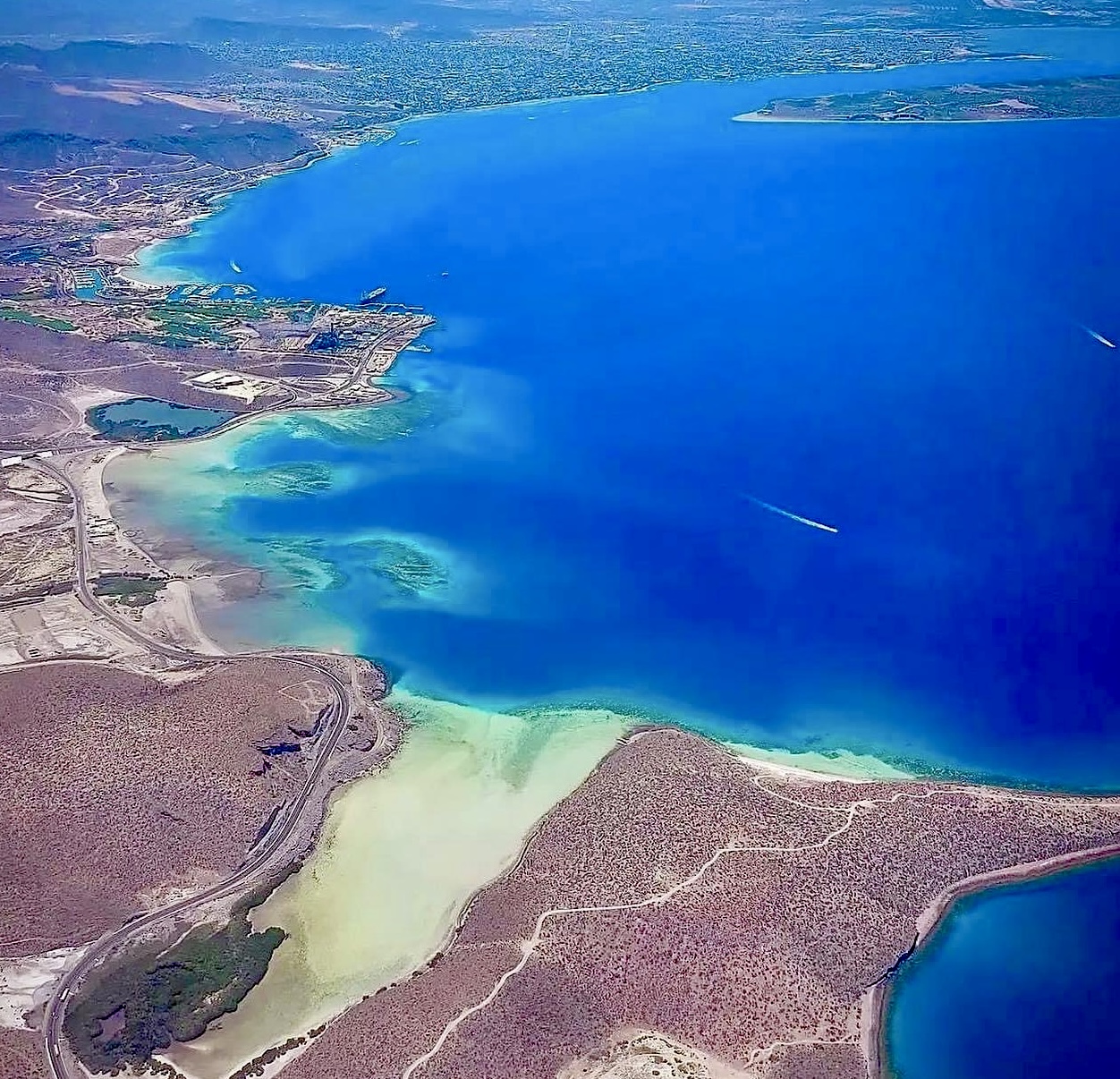
I didn't plan to live here. In March 2020, with a pandemic beginning and my elderly parents in Mexico, I left a career in Miami and came to La Paz to be with them. No plan, no house, no idea that I'd end up selling real estate. Then one morning on the malecón the bay turned a color I still can't name, pelicans slid past in a perfect line just above the water, and I understood that I wasn't going anywhere.
I first wrote this guide in 2024. Since then the income rules for residency have changed, the tourist permit works differently, card fees went up and bringing a dog across the border got more complicated. So I've rewritten it from scratch. If you're weighing a life in Baja California Sur, this is what you actually need to know in 2026, the paperwork and the part no form will tell you.
Can Americans, Canadians and Brits Move to Mexico?
Yes. Mexico is one of the easiest countries in the world for North Americans and Brits to settle in legally, and you don't give anything up to do it. Becoming a resident of Mexico has no effect on your U.S., Canadian or UK citizenship, your passport or your right to go home.
The path is the same for all three nationalities. You apply for residency at a Mexican consulate in your home country, show that you can support yourself, then finish the process at an immigration office here. Canadians apply at consulates in Canada (Vancouver, Calgary, Toronto, Montreal and others), Americans at any of the dozens of consulates across the U.S., and Brits through the consular section of the Mexican Embassy in London.
A word for U.S. citizens: moving to Mexico doesn't end your obligation to file U.S. taxes. Mexico may also consider you a tax resident once your life is centered here. A cross-border accountant is worth an hour of your time before you move, not after.
Visiting vs. Living: The Tourist Permit Has Changed
Most people arrive on a visitor permit (in Mexico, the FMM, or Forma Migratoria Múltiple). It's issued when you land, and it's now digital at the major airports, including Los Cabos.
The FMM allows a stay of up to 180 days, and "up to" is doing a lot of work in 2026. For years nearly everyone flying in received the full six months. Today immigration officers routinely match the days to your stated plans, so a one-week vacation may earn you ten days. Whatever number the officer gives you is your limit, and it can't be extended.
You also can't work on an FMM, and people who string together years of back-to-back tourist stays are increasingly being questioned at the counter. If you intend to live here, even part of the year, residency is the honest and far less stressful route.
Did You Know? When you arrive to complete your residency, don't use the automated kiosks or enter as a tourist. Go to a staffed booth, show your residency visa and tell the officer you're coming for your canje. Entering as a tourist by mistake can derail the whole process.
How Mexican Residency Works in 2026
There are two kinds of residency for people moving here on their own means. Temporary residency (Residente Temporal) is where most people start. It's renewable for up to four years, after which you can convert to permanent residency (Residente Permanente), which never expires and has no further income tests. Retirees whose pension meets the higher permanent threshold can apply for permanent residency straight away.
The process, step by step
Book a consulate appointment in your home country. Appointments can take weeks to get, so start early.
Prove economic solvency with either monthly income (typically six months of statements) or savings and investments (typically twelve months of statements). You choose one route; you can't combine them.
Receive your visa sticker. If approved, the consulate places a single-entry visa in your passport, valid for 180 days.
Enter Mexico and start the exchange (the canje) at the immigration office (INM) within 30 days of arrival. You'll need to stay in Mexico until your card is issued.
Collect your residency card, then get your national ID number (a CURP), which you'll need for banking, IMSS and most official paperwork.
From booking the consulate appointment to holding your card, plan on three to six months. INM card fees roughly doubled on January 1, 2026, with a one-year temporary card now around MXN 11,000, so budget for that as well.
2026 financial requirements
Since mid-2025, consulates calculate these thresholds using Mexico's UMA (Unidad de Medida y Actualización, a government index) rather than the minimum wage. The 2026 UMA is MXN 117.31 per day. Each consulate converts to dollars at its own rate and interprets the rules slightly differently, so treat these as approximate:
Residency type | Monthly income (net) | Savings / investments |
|---|---|---|
Temporary | ~MXN 79,770 (about US$4,300–$4,500) | ~MXN 1.34 million (about US$73,000–$76,000) |
Permanent | ~MXN 133,700 (about US$7,300–$7,800) | ~MXN 5.38 million (about US$290,000–$315,000) |
These figures are accurate as of November 2026. They change every January when the UMA updates, and they vary between consulates, so check your consulate's current requirement sheet before your appointment.
Moving to Mexico With Your Dog or Cat (2026 Rules)
Mexico is still a very pet-friendly place to move, and La Paz is full of dogs on the malecón, good vets and rentals that accept pets. What changed in 2026 is the paperwork, because of a parasite called New World screwworm that has turned up on both sides of the border.
Dogs coming from the U.S.: since August 3, 2026, Mexico requires a New World screwworm inspection certificate, signed by a USDA-accredited veterinarian no more than five days before your dog arrives.
Cats from the U.S., and dogs and cats from Canada: no health certificate is needed. Your pet is simply inspected on arrival.
On arrival: every dog and cat is checked by SENASICA, Mexico's animal health agency, for signs of disease, external parasites and open wounds. Travel in a clean carrier with no bedding, toys or treats inside.
Going back to the U.S.: dogs need a screwworm-free certificate from a vet in Mexico, plus the CDC's online Dog Import Form. Plan the return trip before you leave.
These rules shifted several times in 2026, so check the USDA APHIS "Pet Travel from the United States to Mexico" page and SENASICA's guidance a few weeks before you travel. Our guide to moving to Mexico with pets covers airlines, crates and settling in.

Healthcare in Baja California Sur
As the state capital, La Paz has public hospitals, private hospitals and a deep bench of specialists, and private care costs a fraction of what it does in the U.S. Most expats here use some mix of three options.
Private care, paid out of pocket for routine visits, which are inexpensive enough that many people don't bother claiming them.
Private or international health insurance for anything serious. Premiums depend heavily on age and coverage.
IMSS, Mexico's public health insurance, which residents can join voluntarily. In 2026 the annual fee ranges from MXN 9,300 for the youngest age group to MXN 20,600 for ages 60–69 (MXN 14,850 for ages 50–59). Expect a medical questionnaire and exclusions for pre-existing conditions.
Los Cabos has the other major cluster of private hospitals in the state. Smaller towns like Todos Santos and La Ventana rely on clinics, so serious care means a drive to La Paz or Cabo, which is worth weighing if you're choosing between towns. For more detail, see our guide to healthcare in Mexico for expats.
What It Costs to Live Here
Baja California Sur is far more affordable than coastal life in the U.S. or Canada, but it isn't the $1,500-a-month fantasy that still circulates online. Based on current rental data, a single person living comfortably in La Paz typically spends US$1,700–$2,200 a month, and a couple in a two-bedroom near the water lands at US$2,500–$3,500. Todos Santos and Los Cabos cost more, while La Ventana in the off-season costs less.
Summer electricity is the line item that surprises people. Air conditioning from May through October can add US$80–$150 a month to a La Paz power bill. Our 2026 cost of living breakdown for Baja California Sur runs the full numbers town by town.
Where Expats Live in Baja California Sur
This is where people spend the least time and should spend the most. The towns of Baja Sur are genuinely different from one another, and the right one depends on how you want an ordinary Tuesday to feel.
Did You Know? Baja California and Baja California Sur are two different Mexican states. Baja California, to the north, includes Tijuana, Rosarito and Ensenada. Baja California Sur, the southern half of the peninsula, is home to La Paz, Todos Santos and Los Cabos, and it's the one this guide is about.
La Paz is the capital, a real city of around 300,000 people with hospitals, universities, an airport and an established community of several thousand foreign residents. It's where you get city services and the Sea of Cortez in the same day, at a calmer and more Mexican pace than Cabo.
El Centenario sits just west of La Paz on the bay, with more space, quieter streets and big sunsets, about 15 to 20 minutes from the center of the city.
Todos Santos is a Pueblo Mágico on the Pacific side, known for its art scene, surf and food culture. It's beautiful and it costs more than La Paz.
La Ventana and El Sargento come alive from November to April when the wind brings kiteboarders from all over the world, and go very quiet in summer.
Los Cabos (San José del Cabo and Cabo San Lucas) has the international airport, the most services and the highest prices. San José is the quieter, more livable of the two.
Loreto, further north, is small, historic and slower still, with a national marine park right offshore.
I compare them in much more depth in six Baja California Sur towns compared.

The Honest Trade-Offs
I love living here, and I also tell every client the same things before they commit.
Summer is hot. From roughly May through October, La Paz runs hot and humid, and life shifts to early mornings, evenings and air conditioning. Visit in August before you decide.
Spanish matters. You can get by in English, but daily life, friendships and paperwork all get easier and richer with even basic Spanish.
Paperwork takes patience. Government offices, banks and utilities move at their own speed. Bring every document, plus copies.
Storm season is real. The Pacific hurricane season runs from mid-May through November, with late summer and early fall carrying the most risk. Good construction and a little planning go a long way.
How I'd Approach the Move
After years of helping people settle here, the pattern for a smooth move is simple. Visit in more than one season. Rent for at least six months before you buy, so you learn which neighborhood actually fits your days. Start your residency application at home rather than counting on tourist permits. And when you do buy, work with a licensed, AMPI-affiliated broker and a Notario Público, because unlicensed "agents" are a real risk in any market popular with foreigners.
Foreigners can own property here legally, including on the coast, through a bank trust (known in Mexico as a fideicomiso). It's a well-tested system, and our plain-English fideicomiso explainer walks through how it works.
Your Next Steps
Plan a scouting trip. Our 7-day La Paz scouting itinerary is a good template.
Check your consulate's current residency requirements and book an appointment.
Gather six months of income statements or twelve months of savings statements.
Talk to a cross-border accountant about taxes in both countries.
Line up a six-month rental in the town you like best, then decide where to buy.
Frequently Asked Questions
Can Americans move to Mexico?
Yes. Most Americans apply for temporary residency at a Mexican consulate in the U.S., then finish the process at an immigration office in Mexico within 30 days of arriving. Living in Mexico as a resident has no effect on your U.S. citizenship.
Can Canadians move to Mexico?
Yes. Canadians follow the same process at a Mexican consulate in Canada, and many spend a winter or two in Baja California Sur before applying. Dogs and cats coming directly from Canada don't need a health certificate, only an inspection on arrival.
Can I move to Mexico from the UK?
Yes. UK citizens apply for temporary or permanent residency through the consular section of the Mexican Embassy in London, using the same financial requirements converted to pounds.
How much income do I need to live in Mexico in 2026?
For temporary residency, most consulates are asking for roughly US$4,300–$4,500 a month in net income over the last six months, or about US$73,000–$76,000 in savings over the last twelve months. Permanent residency requires roughly US$7,300–$7,800 a month or about US$290,000–$315,000 in savings. Figures vary by consulate and change every January.
How long can I stay in Mexico without residency?
Up to 180 days on a visitor permit (FMM), but the immigration officer decides the exact number when you arrive, and it's often shorter than 180 days now. The permit can't be extended, and you can't work on it.
Can I bring my dog to Mexico from the U.S.?
Yes. Since August 3, 2026, dogs coming from the U.S. need a New World screwworm inspection certificate signed by a USDA-accredited vet within five days of arrival, and every pet is inspected by SENASICA when it lands. Check the USDA APHIS pet travel page before you go, since these rules have changed more than once this year.
Where do most expats live in Baja California Sur?
La Paz and Los Cabos have the largest year-round expat communities, and La Paz offers the most services for the money. Todos Santos, La Ventana, El Centenario, San José del Cabo and Loreto each attract their own crowd, and the right fit depends on your budget, climate tolerance and how much city life you want.
Is healthcare good in La Paz?
Yes. La Paz has both public and private hospitals and a good range of specialists, at costs well below U.S. levels. Most expats carry private insurance for serious care, and residents can also join IMSS, the public system, for an annual fee based on age.
Can foreigners buy property in Baja California Sur?
Yes. Within 50 km of the coast, foreigners buy through a bank trust called a fideicomiso, which gives you full rights to use, rent, sell and pass on the property. Always work with a licensed broker and a Notario Público.
Get the Full 2026 Relocation Guide
If you want everything in one place, from residency and banking to healthcare and choosing a town, download my free Ultimate Guide to Relocating to Mexico (2026 Edition). And if Baja California Sur keeps making sense, book a call with me. I'm happy to talk through what life here could actually look like for you.
Ready to look at property? Start with our La Paz, Mexico real estate buyer’s guide for neighborhoods, prices and how buying works here, then see current homes for sale in La Paz, Mexico.
Browse live La Paz listings → · Todos Santos listings → · La Ventana listings →