
Moving From Canada to La Paz Mexico | 2027 Guide
Moving From Canada to La Paz, Mexico: Costs, Healthcare, Banking & Relocation Guide
Updated November 2026 | Ian Wilson / Dream Baja Realty
Are you thinking about leaving Canadian winters behind and building a new life somewhere warmer?
For an increasing number of Canadians considering life abroad, Mexico represents an opportunity to enjoy a different lifestyle, experience a new culture, and potentially make their retirement or living budget go further.
And while destinations like Puerto Vallarta, Playa del Carmen, and Los Cabos frequently attract attention, there’s another destination worth discovering: La Paz, Baja California Sur.
Located on the Sea of Cortez, La Paz combines beautiful beaches, a vibrant Mexican community, everyday conveniences, and access to some of the most spectacular natural surroundings in North America.
But relocating from Canada to Mexico requires more preparation than simply booking a flight and finding a home.
You’ll need to consider residency, healthcare, banking, taxation, property ownership, transportation, and the financial implications of living outside Canada.
Let’s explore what Canadian citizens should know before making La Paz their new home.
1. Why Are Canadians Considering La Paz, Mexico?
La Paz is the capital of Baja California Sur, situated approximately two hours north of Los Cabos by road.
Unlike destinations built primarily around international tourism, La Paz is a functioning Mexican city with government offices, hospitals, universities, schools, local businesses, and established residential communities.
That makes it appealing to Canadians who want somewhere to live rather than simply somewhere to vacation.
Some of the lifestyle advantages include:
Warm weather: Sunshine and mild winter temperatures, although summers can be very hot and humid.
Ocean access: Beaches, boating, kayaking, snorkeling, scuba diving, and fishing are important parts of the local lifestyle.
Established communities: Canadians and Americans live alongside Mexican families and longtime residents.
A more relaxed pace: La Paz generally feels less resort-oriented than Los Cabos.
Housing variety: Options range from centrally located condominiums to detached homes in quieter residential communities.
Of course, no destination is perfect.
The summer heat can be intense, some imported products cost more than expected, and adjusting to Mexican bureaucracy requires patience.
The important question isn’t whether La Paz is perfect. It’s whether the lifestyle aligns with your priorities. Explore life in La Paz here
2. Can Canadians Legally Live in Mexico?
Yes.
Canadians can visit Mexico subject to its immigration requirements, and eligible applicants can obtain temporary or permanent residency.
However, visiting Mexico and establishing legal residency are different things.
Visiting Mexico
Canadian passport holders generally do not need a visa for ordinary tourism visits, but Mexican immigration authorities determine the authorized length of stay.
Visitors should not assume they will automatically receive 180 days.
If you’re planning an extended stay or permanent relocation, determine the appropriate immigration category before leaving Canada.
Temporary Residency
Temporary residency is commonly used by foreigners planning to live in Mexico for more than 180 days without immediately seeking permanent residency.
It can permit residence for up to four years, subject to the applicable immigration process and renewals.
Applicants may qualify through financial solvency, family relationships, or other legally recognized categories.
Permanent Residency
Permanent residency is appropriate for eligible individuals intending to establish an indefinite residence in Mexico.
Qualification depends on individual circumstances and the applicable consular or immigration criteria.
Important: Financial qualification amounts can change, and Mexican consulates may apply different documentation requirements. Verify the current requirements directly with the consulate handling your application.
Your residency status does not automatically determine your Canadian tax residency, and purchasing a home in Mexico does not automatically grant you Mexican residency.
These are separate matters requiring separate planning.
3. Understanding the Cost of Living in La Paz
One of the biggest motivations for Canadians considering Mexico is the possibility of reducing everyday expenses.
But is La Paz actually cheaper than Canada?
The answer depends heavily on how you choose to live.
Housing
Housing is often the biggest expense.
La Paz offers several different residential environments.
Centro and Esterito: Attractive to people seeking access to restaurants, cafés, services, and the Malecón.
La Posada and Fidepaz: Established residential neighborhoods offering access to city amenities and a variety of housing types.
El Centenario: Popular with buyers looking for larger lots, detached homes, outdoor space, and a quieter residential environment.
Puerta Cortés: An upscale marina and resort-oriented community with premium residential properties and amenities.
Rental and purchase prices vary considerably by location, size, amenities, and proximity to the water.
A luxury ocean-view condominium may cost substantially more than a modest home in an inland neighborhood.
For that reason, it’s better to compare actual properties than rely on a generic claim that Mexico is inexpensive.
Groceries
Locally produced foods, seasonal fruit and vegetables, and many Mexican grocery staples can offer good value.
Imported products, specialty brands, and some items familiar to Canadian shoppers may be significantly more expensive.
Shopping habits make a difference.
A household that purchases mostly local ingredients may have a very different grocery budget from one that insists on Canadian and American imported brands.
Utilities
Electricity expenses deserve special attention.
La Paz summers can be extremely hot, making air conditioning essential for many households.
Electricity costs depend on the property, insulation, appliance efficiency, consumption, and the applicable CFE tariff.
Internet service, water, propane, and property maintenance should also be included in your budget.
Transportation
La Paz is a relatively spread-out city.
Although certain central neighborhoods are walkable, many residents prefer having a vehicle.
Budget for fuel, insurance, maintenance, registration, and potentially importing or purchasing a vehicle.
The best approach is to prepare a realistic La Paz household budget based on your own lifestyle rather than comparing national averages.
4. Canadian Banking and Currency Exchange
Moving between two currencies adds a financial consideration that shouldn’t be overlooked.
Most everyday expenses in La Paz are paid in Mexican pesos, while many Canadians receive income or hold savings in Canadian dollars.
That means your purchasing power can change as exchange rates fluctuate.
Before Moving
Consider the following:
Maintain access to Canadian banking. Some Canadians retain Canadian bank accounts for pension deposits, investments, or other financial obligations.
Investigate international transfer options. Compare bank wire transfers, regulated currency exchange services, transaction fees, and exchange-rate spreads.
Understand Mexican banking requirements. Opening an account may require residency documents, identification, an RFC, proof of address, and additional information depending on the institution.
Keep an emergency reserve. Avoid depending on a single transfer method or bank card.
Plan for exchange-rate movements. If your retirement income is paid in Canadian dollars, a weaker Canadian dollar can increase your effective cost of living in Mexico.
For major transactions such as buying real estate, currency conversion deserves particular attention.
Mexican property transactions may involve prices quoted in US dollars, Mexican pesos, or both.
The contract should clearly establish the payment currency, exchange-rate provisions when applicable, payment procedures, and responsibility for transaction costs.
5. What Happens to Canadian Healthcare Coverage?
Healthcare is one of the most important issues Canadian retirees should address before moving.
Canada’s provincial and territorial healthcare systems have eligibility requirements related to residency and physical presence.
Those rules vary by province and territory.
A British Columbia resident may face different requirements from someone insured in Ontario or Alberta.
Before relocating, contact your provincial or territorial healthcare authority and ask:
How long can I remain outside Canada without affecting coverage?
What happens if I establish permanent residence in Mexico?
Does my plan cover emergency treatment abroad?
What documentation is required to maintain or reinstate coverage?
What happens if I return to Canada after several years overseas?
Do not assume your provincial health card will provide adequate coverage in Mexico.
Healthcare in La Paz
La Paz offers public and private healthcare options, including hospitals, physicians, laboratories, dental care, and medical specialists.
Many international residents choose private healthcare providers and either purchase appropriate insurance or pay for certain services directly.
Your decision should account for age, medical history, prescription requirements, potential emergencies, and coverage for major procedures.
A particularly important consideration for retirees is whether an insurance policy provides coverage for pre-existing conditions.
Healthcare planning should happen before moving—not after your first medical emergency.
6. Canadian Pensions and Retirement Income
Many Canadians considering relocation want to know whether they can continue receiving Canadian retirement benefits while living in Mexico.
The answer depends on the specific benefit and their eligibility.
Canada Pension Plan
Eligible recipients can generally receive CPP retirement benefits while living outside Canada.
Old Age Security
OAS payments may continue abroad, but eligibility depends partly on how long you’ve lived in Canada after age 18 and other applicable rules.
Guaranteed Income Supplement
GIS has more restrictive rules related to residence in Canada, and extended periods abroad can affect eligibility.
Before relocating, speak with Service Canada about your particular circumstances.
You should also investigate taxation of pension income and any applicable withholding obligations.
The financial consequences can differ substantially between someone spending four months a year in La Paz and someone permanently relocating.
7. Canadian Tax Residency: An Important Consideration
Moving to Mexico does not automatically mean you stop being a Canadian tax resident.
The Canada Revenue Agency considers several factors when determining tax residency, including significant residential ties.
These can include:
Maintaining a home in Canada
Having a spouse or dependants residing in Canada
Maintaining financial and personal connections
The nature and duration of your absence
Establishing residential ties in another country
Canadian tax residency and Mexican tax residency are separate legal questions.
Depending on your circumstances, you may have reporting or tax obligations in one or both countries.
Before making permanent arrangements, consult a qualified cross-border tax professional familiar with Canada and Mexico.
This is particularly important if you own Canadian real estate, operate a business, receive pension income, or hold significant investments.
8. Can Canadians Buy Property in La Paz?
Absolutely.
Canadian citizens can legally purchase real estate in Mexico.
However, the ownership structure depends on the property’s location and intended use.
Because La Paz is located within Mexico’s coastal restricted zone, foreign buyers purchasing residential property commonly use a Mexican bank trust called a fideicomiso.
In this arrangement, a Mexican bank holds legal title as trustee while the foreign purchaser holds beneficial rights under the trust.
These rights generally include the ability to use, enjoy, sell, and transfer the property, subject to applicable law and the trust agreement.
A fideicomiso is not the same as renting a property from the bank.
Foreign purchasers should also understand the role of the Mexican notary, title verification, property surveys, closing costs, and due diligence.
Working with a knowledgeable local brokerage and independent legal professionals can help buyers identify and address potential issues.
9. Should You Rent Before Buying?
For many Canadians, renting before purchasing is a sensible approach.
It gives you an opportunity to experience La Paz during different seasons, explore neighborhoods, and understand daily life.
A property that feels perfect during a January vacation might feel quite different during the summer.
Renting also helps you determine your priorities.
Do you want to be within walking distance of the Malecón?
Would you prefer a detached home in El Centenario?
Is a managed condominium more appealing than maintaining a large property?
There’s no universal answer.
The right choice depends on your lifestyle, finances, and long-term intentions.
10. Your Canadian-to-Mexico Relocation Checklist
Before leaving Canada, make sure you’ve considered the following:
Confirm the appropriate Mexican immigration status.
Review your provincial healthcare eligibility.
Speak with a cross-border tax professional.
Verify CPP, OAS, and other benefit implications.
Investigate banking and currency exchange options.
Prepare a realistic monthly budget in Mexican pesos.
Research La Paz neighborhoods.
Plan an extended scouting visit.
Review vehicle, insurance, and transportation arrangements.
Research property ownership requirements before purchasing.
Prepare important personal, financial, and medical documents.
Create a practical timeline for your move.
11. Start Planning Your Move to La Paz
Relocating from Canada to Mexico can be an exciting opportunity to build a new lifestyle.
But making that move successfully requires more than enthusiasm.
Understanding immigration, finances, healthcare, housing, and the realities of everyday life allows you to make informed decisions.
At Dream Baja Realty, we help Americans and Canadians explore living in Baja California Sur, understand the Mexican real estate process, and find properties suited to their goals.
Whether you’re just beginning your research or actively preparing to purchase a home in La Paz, we’re here to help.
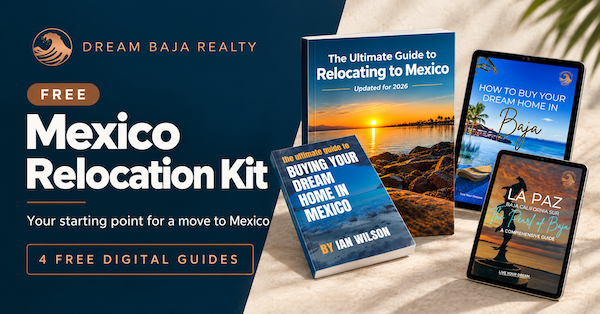
Download Your FREE Mexico Relocation Kit
Get practical resources covering buying property, relocating to Mexico, and discovering La Paz.
GET YOUR FREE MEXICO RELOCATION KIT
Want a More Complete Relocation Roadmap?
Explore our Ultimate Mexico Relocation Masterclass, featuring eight modules and 43 video lessons covering the key decisions involved in planning a move to Mexico.
EXPLORE THE MEXICO RELOCATION MASTERCLASS
Dream Baja Realty — Live Your Dream. Embrace Baja.
Disclaimer: This article is for general educational purposes and does not constitute immigration, tax, legal, investment, or financial advice. Requirements and eligibility can change. Consult qualified professionals and relevant government authorities.