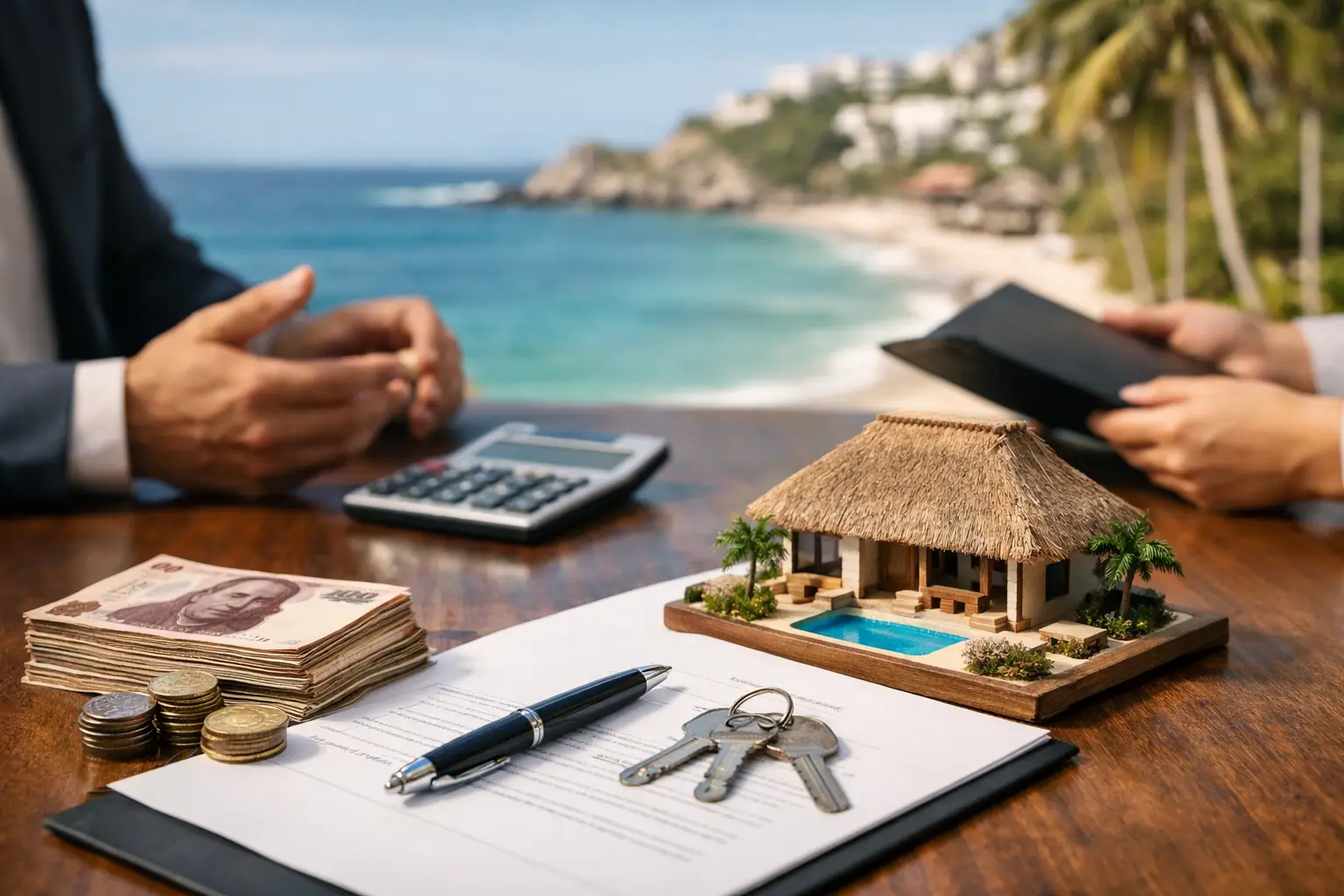
Mexico Closing Cost Planning Guide for Buyers
The view may be what brings you to Baja, but a clear budget is what lets you enjoy it with confidence. This Mexico closing cost planning guide is designed for international buyers who want to understand the real cash required to purchase a home, condo, or land parcel in Baja California Sur - before making an offer.
Mexico transactions are not structured exactly like closings in the United States or Canada. Costs vary based on the municipality, property type, purchase price, ownership structure, and the details of the negotiated contract. A thoughtful estimate early in the process helps protect your buying power and keeps your attention where it belongs: finding a property that supports the life you want to build in Baja.
Mexico Closing Cost Planning Guide: Start With the Right Number
For many resale purchases in Baja California Sur, buyers should plan for closing costs of roughly 4% to 8% of the purchase price. This is a planning range, not a fixed quote. A condominium purchased through a standard bank trust may fall within one range, while vacant land, a new build, or a transaction with unusual title history can require additional work and expense.
The most useful question is not, “What are closing costs in Mexico?” It is, “Which costs apply to this specific property, and who is responsible for each one?” Your offer and purchase agreement should make those answers clear.
A strong buyer budget also separates three categories: the purchase price, one-time closing expenses, and ongoing ownership costs. Closing funds are generally due near the end of the transaction, while annual trust fees, property taxes, HOA dues, insurance, and maintenance continue after you receive the keys.
The Major Costs Buyers Should Expect
Notary fees and legal formalization
In Mexico, a notario público has a much broader legal role than a notary in the United States or Canada. The notary is a specialized public official who reviews the legal status of the property, prepares and formalizes the deed, confirms tax compliance, and records the transaction with the appropriate public registry.
Notary costs typically make up a meaningful portion of a buyer’s closing budget. Fees can depend on the property value and the complexity of the file. The notary may also collect certain taxes, certificates, registrations, and official charges as part of the closing statement. That is why an itemized estimate matters more than relying on a single percentage quoted at the beginning of your search.
Acquisition tax
Buyers commonly pay a property acquisition tax, often called ISAI. The rate and calculation can vary by municipality and may be based on the assessed value, purchase price, or the higher of applicable values. In Baja California Sur, the exact amount should be confirmed for the property and municipality involved.
Acquisition tax is generally a buyer expense, although nearly every closing cost can be addressed in negotiations. If a seller agrees to a credit or contributes toward expenses, make sure the arrangement is documented clearly and reviewed by the professionals handling the transaction.
Public registry, certificates, and permits
A purchase requires registration of the new ownership rights, plus documents and certificates that support a clean transfer. These can include cadastral records, certificates of no liens, tax certificates, and municipal documentation.
Individually, these charges may not be the largest part of your budget. Together, they are part of the necessary work that turns an accepted offer into legally documented ownership. Properties with older records, missing permits, estate issues, or previous construction that was never properly recorded can add time and cost.
Appraisal and valuation costs
An official appraisal may be required for tax, trust, or financing purposes. Even when it is not strictly required, a valuation can be valuable for a buyer who wants another perspective on the property’s market position.
Do not confuse a formal appraisal with a comparative market analysis. Your real estate advisor can help you evaluate comparable sales and current inventory, while an appraiser provides a formal valuation for the transaction file. Both can be useful, but they serve different purposes.
Bank trust costs for foreign buyers
Foreign buyers can own residential property in Mexico’s restricted zone through a fideicomiso, commonly called a bank trust. Much of Baja California Sur falls within this coastal zone. The bank holds title in trust while you retain the right to use, sell, lease, improve, and pass the property to named beneficiaries.
If the property is already held in a trust, the transaction may involve an assignment of beneficial rights, which can be more straightforward than creating a new trust. If a new trust is needed, budget for setup costs, bank processing, permits, and an annual trust fee after closing.
The bank trust is not a rental management agreement or a limitation on your practical enjoyment of the home. It is the established ownership vehicle that allows many foreign buyers to purchase residential property near the coast. Your closing team can explain whether the existing trust can be assigned and what fees apply in that particular case.
Legal review and due diligence
A qualified real estate attorney is not always mandatory, but independent legal review is a prudent investment for many international buyers. This is especially true when purchasing land, a home with recent construction, property held through an estate, or a transaction involving a Mexican corporation.
Legal due diligence may examine title history, liens, trust status, permits, condominium regime documents, HOA obligations, seller authority, and the terms of the purchase contract. The cost is modest compared with the price of correcting a preventable issue after closing.
Costs That Can Change the Budget
Not every property is a standard resale residence. New construction, commercial property, and vacant land can have different tax treatment or documentation needs. Value-added tax, or IVA, may apply to certain portions of a transaction, particularly for land, commercial uses, or construction-related components. A completed residential home is often treated differently, but buyers should never assume IVA does or does not apply without reviewing the specific purchase.
Seller expenses can also affect negotiation. In many Baja transactions, the seller customarily pays brokerage commission and may be responsible for capital gains tax, if applicable. Yet customs are not substitutes for contract language. Each transaction should identify who pays which expense, including trust assignment fees, prorated property taxes, HOA transfer charges, utility balances, and closing service fees.
Currency is another planning consideration. Your contract may be priced in U.S. dollars, Mexican pesos, or structured with a defined exchange-rate method. If you are moving funds from another country, ask early about timing, bank requirements, wire instructions, and the currency in which each closing expense will be calculated. Exchange-rate movement can change the actual amount you need to send.
Build Your Budget Before You Write an Offer
Before submitting an offer, ask for a preliminary closing-cost estimate based on the property, purchase price, and ownership structure. It will be an estimate rather than a final statement, but it provides a far better foundation than a generic online calculator.
Your working budget should account for:
- The negotiated purchase price and earnest-money deposit
- Estimated notary, acquisition tax, registry, and administrative fees
- Trust setup or assignment costs and the first annual trust fee, if applicable
- Legal review, inspection, appraisal, insurance, and any lender charges
Inspections deserve special attention. While inspection practices differ by property and region, an inspection can identify roof, electrical, plumbing, structural, pool, septic, and solar issues before closing. In a coastal environment, corrosion, drainage, water storage, and deferred maintenance can materially affect both your first-year costs and your long-term enjoyment of the property.
It is wise to reserve a contingency beyond your projected closing costs. A practical buffer can cover wiring fees, document updates, unexpected repairs negotiated after inspection, or timing differences in currency conversion. The goal is not to expect trouble. It is to avoid making decisions under pressure if a small variable changes.
Questions Worth Asking Your Closing Team
Clear questions create clear expectations. Ask whether the property has an existing fideicomiso and whether it can be assigned. Confirm whether the purchase price includes furniture, vehicles, solar equipment, or other personal property, since those details can affect documentation and valuation.
Ask for confirmation that property taxes, utilities, HOA dues, and any special assessments are current. For a condo, review HOA financial health, rules on vacation rentals, reserve funding, and upcoming capital projects. For land, verify legal access, utility availability, zoning, boundaries, and the feasibility of the home you hope to build.
Finally, ask when you will receive the final closing statement and what documents the bank, notary, and closing coordinator need from you. International transactions are easier when identity documents, beneficiary instructions, source-of-funds information, and wire arrangements are organized well ahead of the closing date.
A Baja home should feel like an opening chapter, not a stack of surprises. With property-specific estimates, careful due diligence, and trusted local guidance, you can move from offer to ownership prepared to embrace Baja with clarity and peace of mind.