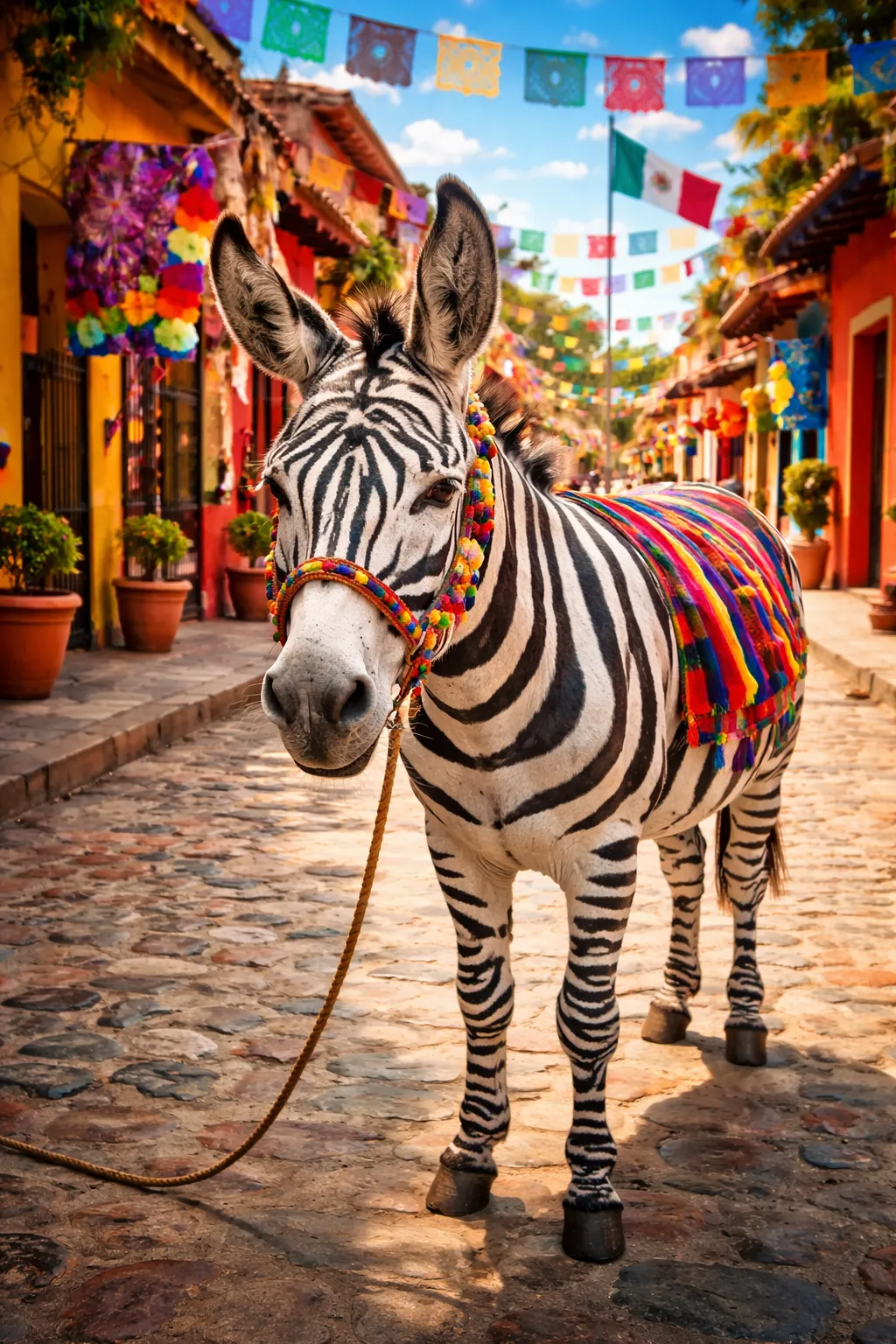
The "Real Mexico" Problem
If you recently came to visit me and you're reading this, OF COURSE I don't mean you!
- Love, Chris
No one even has a sombrero on in here.
Lately I’ve been hosting a lot of friends in La Paz.
Some land here and soften almost immediately. Smiles grow and faces shine with relaxed joy. They immediately settle into the pace and enjoy the feeling of being here. On the way back to the airport, they sigh and say they feel deeply relaxed and rejuvenated. They leave with something quieter than excitement. More like calm.
For others, it takes longer to settle.
Not in obvious ways. They enjoy the food. They like the water. They say all the right things. But there’s a kind of restlessness underneath it. A sense that something isn’t quite landing.
I’ve started to notice a pattern in those moments.
It often shows up versions of the same question:
“Can you take us somewhere more… real Mexico?”
The Question Behind the Question
The strange part is that I’m usually already doing exactly that.
We’re walking on the malecón, or eating in a mariscos spot where we’re the only güeros in the place, or standing in a grocery store aisle. No signage aimed at tourists. No curated aesthetic. No algorithm-friendly lighting. Just everyday life, plastic chairs, a TV playing hyper local soccer (fútbol), and food that exists because people eat there every day. Real Mexico.
And still, the question comes.
It’s not really about the place.
It’s about expectation.
The White Gaze, Gently
There’s a concept often called the “white gaze.”
It’s not always hostile. Most of the time it isn’t. It’s a way of seeing that comes from being used to things being organized, explained, and presented for you.
When people travel, that lens doesn’t disappear. It just shifts.
Instead of asking, “What is this place?” the question becomes, “Does this match what I think this place should be?”
And when it doesn’t, something feels off.
Authenticity as a Performance
“Authentic” becomes a moving target.
It starts to mean something specific in people’s minds: a certain look, a certain kind of room, a certain kind of energy. Something that feels untouched, but also legible.
But real places don’t organize themselves around being understood.They organize themselves around being lived in. Sometimes that looks quiet. Sometimes it looks ordinary. Sometimes it looks like nothing special at all.
And that’s often the most real thing there is. Lived in, trustworthy and timeworn.
What You Miss When You’re Looking For “Real”
When you’re scanning for authenticity, you’re often looking past it. Or worse, you've built a palace- or hellscape- based on hearsay or misguided information. Once, while working in Frankfurt, a young woman who was working with me said, "I would love to go to the US someday, but I haven't ever held a gun, I wouldn't even know what to do with it." Her reality about the US was shaped by her impressions, shaped by her ideas, shaped by news and movies. This is not a blog for discussing gun laws, this story is here as an example that mislabeling places is a universal experience. Movies do so much to portray a place, often with hyperbole and stylized, imagined interpretations of a place. "Everyone has one [a firearm] there, and use them all the time," she felt.
So many miss the rhythm of a place because they're trying to confirm it. Or make it fit their ideal. If I come with fear or bias that may cause me to miss the conversation at the next table because I'm too busy evaluating the room, I miss an opportunity for connection because I´ve decided no one here could be my people. You miss the way people actually live because you’re asking whether it fits the idea you arrived with.
Arriving Differently
There’s another way to move through (and into) a place. You don’t ask if it’s real. You ask yourself, or maybe even a strangerfriend, what’s happening here. Or you develop a Beginners Mindset, and watch, learn. You don’t look for signals, but you do watch for patterns and rhythms. You pay attention to how those who've been here do it, and most importantly, you let places reveal themselves at their own pace instead of asking them to perform or stick to what you think they are. This is where research, attention, and humility start to overlap.
A Practical Shift
If you’re visiting or thinking about living here, in the Real Mexico, try this:
Pick a place that doesn’t announce itself, find a place not screaming from a billboard or listed in last month's Conde Nast. (Although I do love a lot of the places the New York Times loves)
Sit longer than feels necessary. Bring some cards, or a book. Order something simple. Or something someone is having at the next table. Watch how people move through the space. How they acknowledge one another.
Notice what repeats.
Notice what doesn’t.
That’s where understanding starts.
With all due respect to Señor Frogs and The Place at the mall that has a margarita special for Cinco De Mayo...
The people who end up loving La Paz the most aren’t usually the ones who find the “real” places fastest. They’re the ones who stop looking for them. I'm still finding them.
And start learning how to see. La Paz is not a manufactured simulacrum of Mexico, It is "real Mexico." And I love that about it.