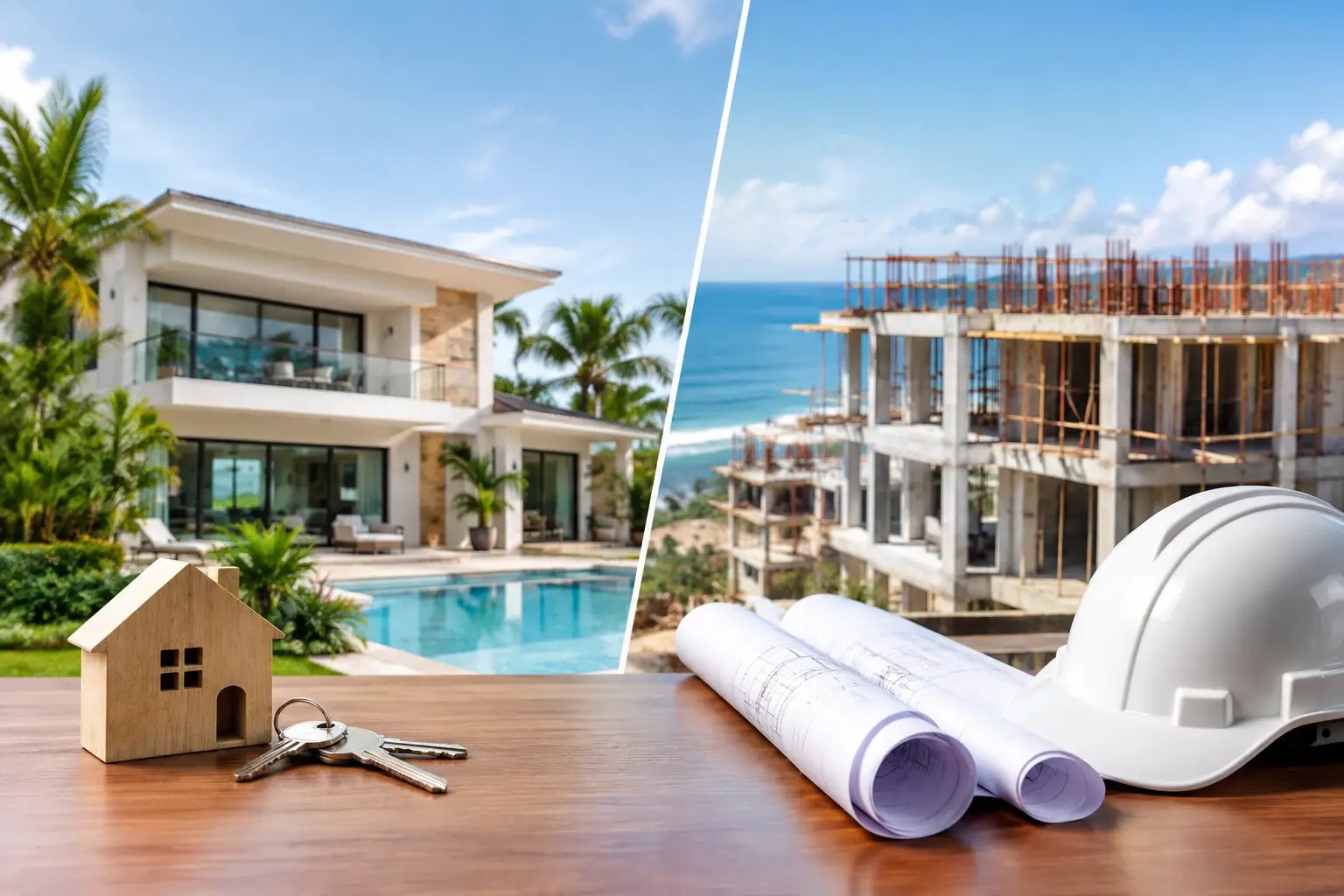
Resale vs. Preconstruction in Mexico: Which Fits?
A terrace facing the Sea of Cortez can look equally compelling in a finished condo or a polished rendering. Yet the resale vs. preconstruction Mexico decision is rarely about choosing the prettier view. It is a decision about certainty, timing, cash flow, and how much of the process you want to manage from another country.
For some buyers, the right answer is a home they can walk through this week, inspect carefully, and enjoy next season. For others, waiting for a new residence with modern systems, early-stage pricing, and personal design choices is worth the added uncertainty. The best fit depends on your goals, not on a blanket rule that one option is always the better investment.
Resale vs. Preconstruction in Mexico: The Core Difference
A resale property already exists. You can see its condition, experience the neighborhood at different times of day, review operating costs, and understand what you are buying before closing. In established communities around La Paz, Todos Santos, La Ventana, and the East Cape, a resale may also come furnished, landscaped, and ready for immediate personal use or rental preparation.
Preconstruction means buying a property that is planned, under construction, or still being completed. Buyers commonly pay through a deposit and construction-stage schedule rather than paying the entire purchase price at closing. The potential appeal is clear: newer finishes, updated layouts, lower maintenance in the early years, and sometimes a purchase price that reflects the project’s earlier stage.
Neither path is automatically safer, more profitable, or better suited to foreign buyers. A strong resale can have deferred maintenance. A new project can be well executed or poorly capitalized. The quality of the property, developer, documents, location, and purchase structure matters more than the label.
When Resale Is the Better Choice
Resale is often the more comfortable route for buyers who value clarity. You can stand in the kitchen, test the water pressure, listen for road noise, evaluate sun exposure, and see whether the view is protected or merely implied. That physical certainty has real value, especially for a buyer who plans to relocate or spend meaningful time in Baja soon.
You want to use the property soon
If your goal is to spend winter in Baja, begin a relocation plan, or have a turnkey second home, resale generally offers the faster route. After a properly managed closing, the home is there. You are not waiting for permits, materials, weather, contractor schedules, or final utility connections.
A furnished resale can also shorten the transition from purchase to enjoyment. That does not mean every furnished home is turnkey in practice. Confirm what stays, assess the age and condition of appliances, and budget for the upgrades that matter to you. Still, the timeline is typically more predictable than a build schedule.
You want evidence, not projections
For an investor, resales offer a track record that a new unit cannot yet provide. You may be able to review HOA fees, recent assessments, historical utility costs, occupancy patterns, and comparable sales. If the home has operated as a vacation rental, ask for performance information while recognizing that past results are not a guarantee of future income.
This is especially useful when comparing condos. A building’s management quality, reserve planning, rules on short-term rentals, maintenance standards, and community culture can shape both your ownership experience and long-term resale appeal.
You prefer fewer moving parts
A resale transaction still requires thorough due diligence. Foreign buyers should work with qualified local professionals to verify title, permits, tax status, condominium documentation where applicable, and the proper ownership structure. In restricted-zone coastal areas, this often includes a bank trust known as a fideicomiso, or a Mexican entity for certain investment situations.
But the process is usually centered on a defined asset. With preconstruction, you are also evaluating the future performance of the developer, construction team, financing plan, specifications, and delivery commitments.
Where Preconstruction Can Create Value
Preconstruction can be an excellent fit for a buyer who has time, understands the risks, and chooses a project with a credible team and clear documentation. The opportunity is not simply getting something new. It is buying into a location or community before it is fully delivered, with an ownership plan that matches the project’s realities.
You can wait for the right home
Many buyers want contemporary architecture, efficient systems, fresh infrastructure, and a layout designed around how they actually live. Preconstruction can provide that, along with limited choices in finishes, cabinetry, appliances, or upgrades depending on the phase of the project.
The ability to personalize has limits. Review the included specifications closely. Renderings, model units, and marketing materials show an intended result, but the purchase contract and its exhibits should define what the developer is obligated to deliver. Ask direct questions about square footage, parking, storage, common areas, landscaping, appliances, and whether ocean views could change as surrounding parcels develop.
You are comfortable with staged payments
A construction schedule can make the purchase feel more manageable because payments are spread over time. That is not the same as lower financial risk. Buyers should understand exactly when each payment is due, whether it is tied to measurable construction milestones, where funds are held, and what occurs if delivery is delayed.
Currency planning matters as well. A property may be marketed or contracted in U.S. dollars, Mexican pesos, or a combination of the two. Your advisor and legal team can help you understand the contractual terms, but it is wise to consider exchange-rate exposure, transfer costs, and the timing of your available funds before committing.
You are buying for the longer term
Preconstruction is usually better suited to buyers with a multi-year horizon. If the project delivers as promised and the location continues to mature, an early buyer may benefit from market appreciation. But appreciation is never guaranteed, and it should not be the only reason to buy.
A more durable case for preconstruction is personal fit: you want to own in a particular community, enjoy the home for years, and can absorb a delay without it disrupting your life or financial plans. That mindset keeps you from treating projected gains as a substitute for due diligence.
The Risks to Evaluate Before You Commit
With resale, the central question is often condition. Inspections can reveal issues with roofs, plumbing, electrical systems, septic, water storage, air conditioning, drainage, structural work, or past repairs. A lower purchase price can lose its advantage quickly if major work is waiting just beyond closing.
With preconstruction, the central question is execution. Investigate the developer’s completed projects, delivery record, construction quality, financial stability, and reputation with prior buyers. A sales presentation cannot answer these questions on its own. Your independent legal and real estate guidance should.
In either case, do not skip the neighborhood analysis. Ask how access roads perform during rain, where water and power come from, what internet options are available, whether planned development could affect privacy, and how seasonality may change the area. The right property on paper can be wrong for your daily life if the setting does not match how you intend to live.
How to Choose Based on Your Goal
Start with your non-negotiables. If you need a home by a specific date, want a proven rental-ready asset, or feel strongly about inspecting every detail before you buy, put resale at the top of your search. If you are drawn to new construction, have flexibility around timing, and are willing to conduct deeper project-level due diligence, preconstruction deserves serious consideration.
Then separate lifestyle value from investment assumptions. A home near the water may be the right purchase because it gives your family a place to gather, supports a future move, and lets you embrace Baja on your terms. Rental income or appreciation may strengthen the decision, but they should be evaluated conservatively, with real operating costs and vacancy periods included.
Finally, compare opportunities on an all-in basis. The list price is only one number. Consider closing costs, furnishings, inspections, legal review, HOA dues, insurance, maintenance, property management, utility setup, and the cost of waiting. A resale that costs more upfront may be less expensive in real life if it can be used immediately. A preconstruction purchase may offer better long-term value if its payment schedule and delivery outlook align with your plans.
The most satisfying Baja purchase is not necessarily the newest home or the fastest deal. It is the one you understand clearly, can hold comfortably, and will be happy to call your own long after the closing documents are signed. A thoughtful local conversation before you commit can turn a beautiful possibility into a decision made with confidence.