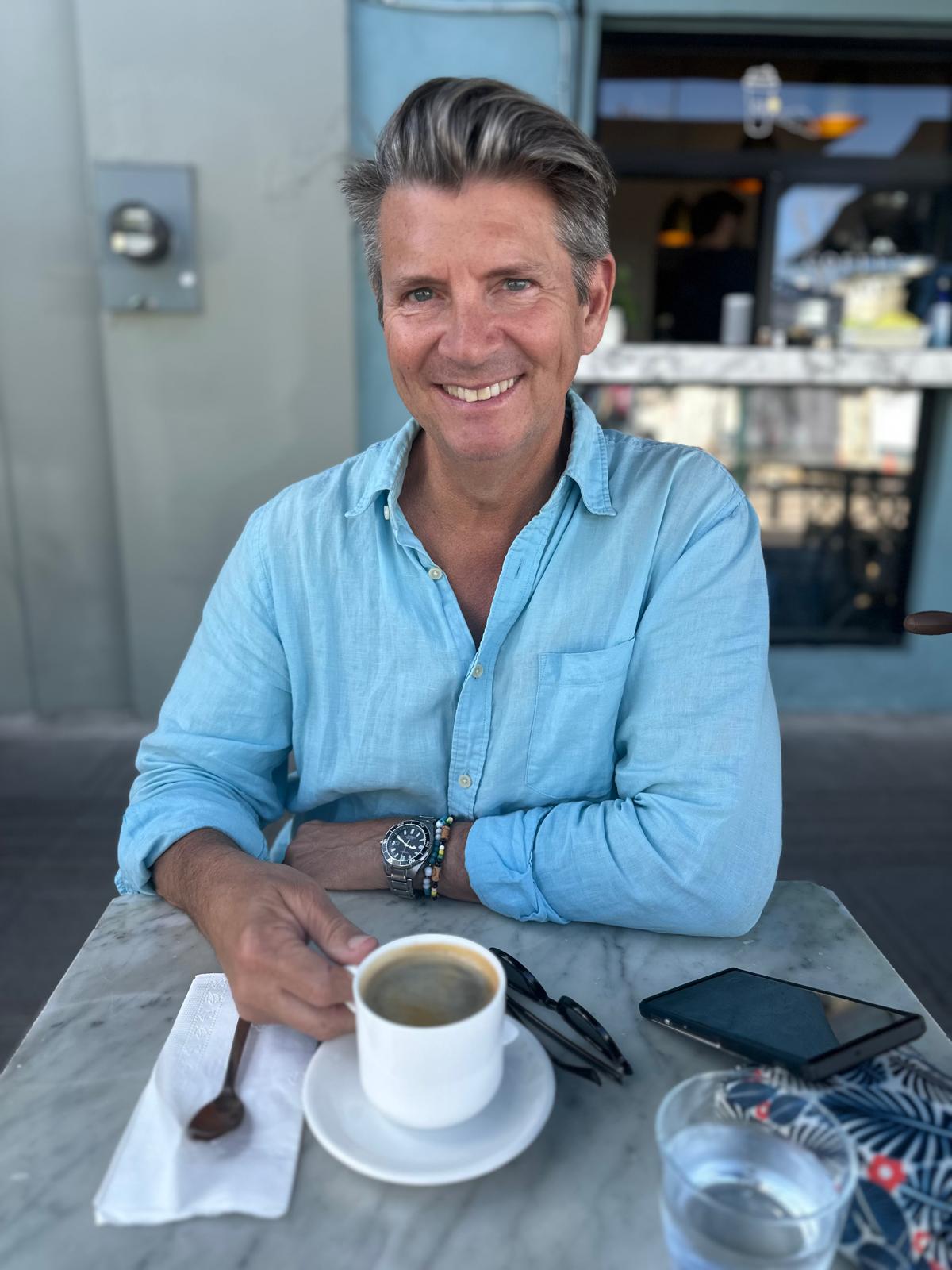
Moving to La Paz Mexico: What It Actually Feels Like to Start Over
Leaving Well Is Part of Arriving Well: What Moving to Mexico Actually Feels Like
Moving to La Paz, Mexico: What It Actually Feels Like to Start Over
Leaving Well Is Part of Arriving Well
I had just returned from Seattle after selling my house. I lived there for sixteen years, and in that house for eleven. It wasn't just a property. It was a life. Routines, neighbors, the people I counted on, and the people who counted on me. Holidays. My father passing. Dinner parties. Giant 4th of July parties. Quiet weeknights. sitting around fires with friends. My wife's cancer. A lot of life happened within those walls.
That kind of knowing doesn't fit into moving boxes. You don't wrap it in bubble wrap or label it "fragile." If anything, I was the fragile one. Not everything gets left behind. Some stuff comes with you. The house belongs to someone else now, but the life I lived there still belongs to me. I think that part of relocation deserves more honesty than it usually gets.
There's a version of moving to a new, shiny place that gets talked about online that feels clean and uncomplicated. Morning light. Ocean views. The promise of starting over somewhere beautiful. Some of that is absolutely real. I feel it here in La Paz all the time. There are mornings when the Sea of Cortez catches the first light, the air is warm enough (or cool, depending on the time of year) to leave the windows open, and something deep inside me quietly says, yes... this fits. This is my habitat.
But that's only part of the story.
Moving well also means leaving well.
It means recognizing that while you're building a new life, you're also honoring the one you left behind. You can be deeply grateful for where you're going without pretending it doesn't cost something to leave where you've been. Those two truths aren't in conflict. In fact, I think holding them both at the same time is one of the first steps toward arriving well.
Back in Seattle, I moved through my day on instinct. Here, I pay attention in a different way. I pause more. I ask more questions. It takes a little more effort, but it also keeps me curious. And I've started to think that's not entirely a bad thing.
The bigger shift, though, has been community.
In Seattle, I had years of history behind me. People I could call without thinking. Friends who knew me before I finished telling the story. Relationships built slowly over dinners, holidays, projects, and the ordinary habit of being there for one another. That history didn't disappear when I moved. But I could immediately feel the difference between something that had taken years to grow and something just beginning.
I've had to remind myself not to compare the two.
Community doesn't arrive with the moving truck. It grows the way it always has: one conversation, one friendship, one invitation, one familiar face at a time. I'm building new relationships, learning new rhythms, and finding my place in a community that was already thriving long before I arrived. No amount of beautiful scenery can replace that overnight.
At the same time, I haven't lost my people. I haven't stopped being part of their lives, or them mine. What's changed is how we stay connected. Closeness isn't automatic anymore. It's intentional. I call more. I check in differently. I stay present on purpose.
If anything, the distance has clarified which relationships matter most. Without proximity doing the work, connection becomes something we choose, again and again.
There's also been a change in the role I play. For much of my life, I was the person who showed up. To feed your dog while you were out of town. To water your plants. To bring your garbage cans back in after collection day. To buy you a drink after a breakup, celebrate a promotion, or simply sit with you when life wasn't making much sense.
Living in another country changes how I do those things, and how often. There are moments when I wish I could be there, but those moments don't make me question the move. They remind me that showing up sometimes looks different than it used to.
But I don't think I've stopped being that person.
If anything, I've realized that belonging isn't about replacing one community with another. It's about letting your capacity for community grow. I'm beginning to build those same kinds of friendships here in La Paz, while still showing up for the people who've known me for years, just in different ways. It's not a transition from one life to another. It's an addition.
The circle gets wider.
Some people in my circle back in the States simply couldn’t imagine making a move like this themselves. And when people can’t picture a choice for their own lives, they sometimes have no shortage of reasons why you shouldn’t make it either. There’s plenty of fear and misinformation around moving abroad, but there’s also something quieter at work: the comfort of the familiar, the assumption that the life you’ve already built is the one you’re supposed to keep maintaining.
A few people saw my move as an escape, or as stepping away from the obligations and ambition that had defined so much of adult life. I understood the reaction, even when I didn’t agree with it. From the outside, choosing a different pace can look a lot like giving something up.
This wasn't an escape. It was a decision.
A decision to build a life that feels more aligned with who I am, while carrying forward the people, experiences, and lessons that shaped me. I didn't come here to leave my old life behind. I came here to continue it in a place that fits.
If you're considering a move of your own, whether it's to La Paz or somewhere entirely different, my advice has less to do with real estate than it does with reflection. Before you start comparing neighborhoods or scrolling through listings, spend some time understanding what you're really looking for, and lastly:
Know your why.
The houses will still be there. If your path happens to lead to La Paz, I'd be honored to help you explore it.
Take your time. That's part of arriving well, too.
Topics Covered in This Post
Moving to Mexico from the U.S.
Living in La Paz, Baja California Sur
What it feels like to start over abroad
The emotional side of relocation
Building community after moving