
Living in La Paz Mexico | What Summer Is Really Like | Dream Baja Realty
"Can you believe it's 98 degrees today?"
"It's still going to be 86 tonight."
"I'd love to jump in the water after work, but traffic..."
Three texts from friends in Austin.
The funny thing is that Austin and La Paz had almost exactly the same temperatures yesterday.
The difference?
I'm sitting in the shaded breezeway of my home in central La Paz. The house is cool inside, but out here there's a steady afternoon breeze moving through the palms and across the patio. By sunset, I'll be out on a paddleboard with friends.
Whenever people find out I live in La Paz, the first question is almost always the same:
"How hot is it in the summer?"
And honestly, I think they're asking the wrong question.
The better question is:
"What's it actually like to live here in July?"
When I first moved here, I assumed summer would slow life down. Instead, I found that it simply changes its rhythm. Most mornings, I'm in the breezeway with a cup of Mexican coffee while Moby chases his ball around the yard. Construction crews are halfway through their day before I've finished my first cup. The beach belongs to the evenings. Dinner gets pushed a little later. You stop trying to fit Baja into the schedule you brought with you and begin adopting the one that already works here.

That's what I mean by Arriving Well. It's less about surviving a new place and more about letting that place teach you how to live there.
I should probably admit something, though. This is a very different article than I would have written a year ago.
Last summer I was living in the middle of a renovation. I had openings where windows would eventually go, doors that hadn't yet arrived, and exactly zero air conditioning. I learned a lot about Baja construction timelines... and even more about how hot a concrete house can get in July.
This summer is different.
The renovation is finished. The windows seal tight. The doors actually keep the cool air where it belongs. I spend a lot more time enjoying the house than thinking about the heat.
Living through both summers taught me something. In Baja, how a house is built matters almost as much as where it's built. Shade matters. Quality windows matter. Efficient mini-splits matter. A house that's designed for Baja works with the climate instead of fighting it.
It's one of the reasons I spend so much time talking with clients about whether they're better off buying a move-in-ready home or taking on a renovation. There isn't a right answer for everyone, but there are always tradeoffs.
That's probably another blog.
One of the things nobody tells you about summer in La Paz is that it changes your household budget in funny ways.
The pool heater gets turned off for months. The clothes dryer hardly gets used because laundry dries outside in no time. Even my gas bill drops because the water heater isn't working nearly as hard.
Of course, my CFE bill is happy to remind me that air conditioning isn't free.
One of the smartest things I learned was how to use mini-splits the way they were designed to be used. When I first moved here, I wanted to cool the whole house because that's what I'd always done. Now I cool the office while I'm working, the living room if friends are over, and the bedroom at night. There's no prize for air-conditioning empty rooms.
By midsummer, you also start thinking about water differently.
You notice dripping faucets. You pay attention to irrigation. You realize why everyone seems to know a good plumber.
The reality is that water isn't just another utility here. It's probably the single biggest issue that will shape La Paz over the next couple of decades.
Interestingly, while researching this article, I came across comments from Governor Víctor Castro Cosío suggesting that La Paz should slow—or even temporarily halt—the approval of new developments until the city's water infrastructure can catch up. His point was simple: first water, then growth.
Reasonable people can disagree about where that balance should be, but I appreciated seeing the conversation happen at the highest levels. It reinforces something locals have understood for years: water isn't just an environmental issue. It's a community issue.
Sure, we sell houses here. But we also call La Paz home. We support local businesses, walk the malecón, spend evenings on the bay, spend weekends at Tecolote Beach, volunteer when we can, and care about what this city will look like twenty years from now.
That means we all have a stake in making sure the city grows in a way that protects both its natural resources and its character. Clean water matters. So do the pace of life, the neighborhoods, the family-owned restaurants, the traditions, and the culture that make La Paz feel like La Paz.
Sustainable growth isn't an obstacle to success. It's the only kind of success that lasts. After all, if we're inviting people to move here, we also have a responsibility to help preserve the very things they're coming here to find.
Then, almost overnight, the rainy season arrives.
Summer storms in Baja are spectacular. The sky darkens, lightning dances over the mountains, and rain falls hard enough to turn dry arroyos into rushing rivers. The smell of rain in the desert is one of my favorite things about this time of year.
It's also when Facebook starts doing what Facebook does.
Every summer you'll see posts claiming the bay is full of sewage, dead animals, or that the bay is suddenly unusable. Like most internet drama, there's usually a kernel of truth wrapped inside a much bigger story. Heavy rains can overwhelm parts of the drainage system, and runoff absolutely carries debris into the bay. Giving the water a day or two to clear after a major storm is just good common sense.
What I've learned is not to ignore those conversations, but not to let them define my experience either.
Stay curious. Let the place teach you. Talk to a Paceño or three. Get to know your vecinos. And don't let the keyboard doomsayers convince you the sky is falling every time it actually does.
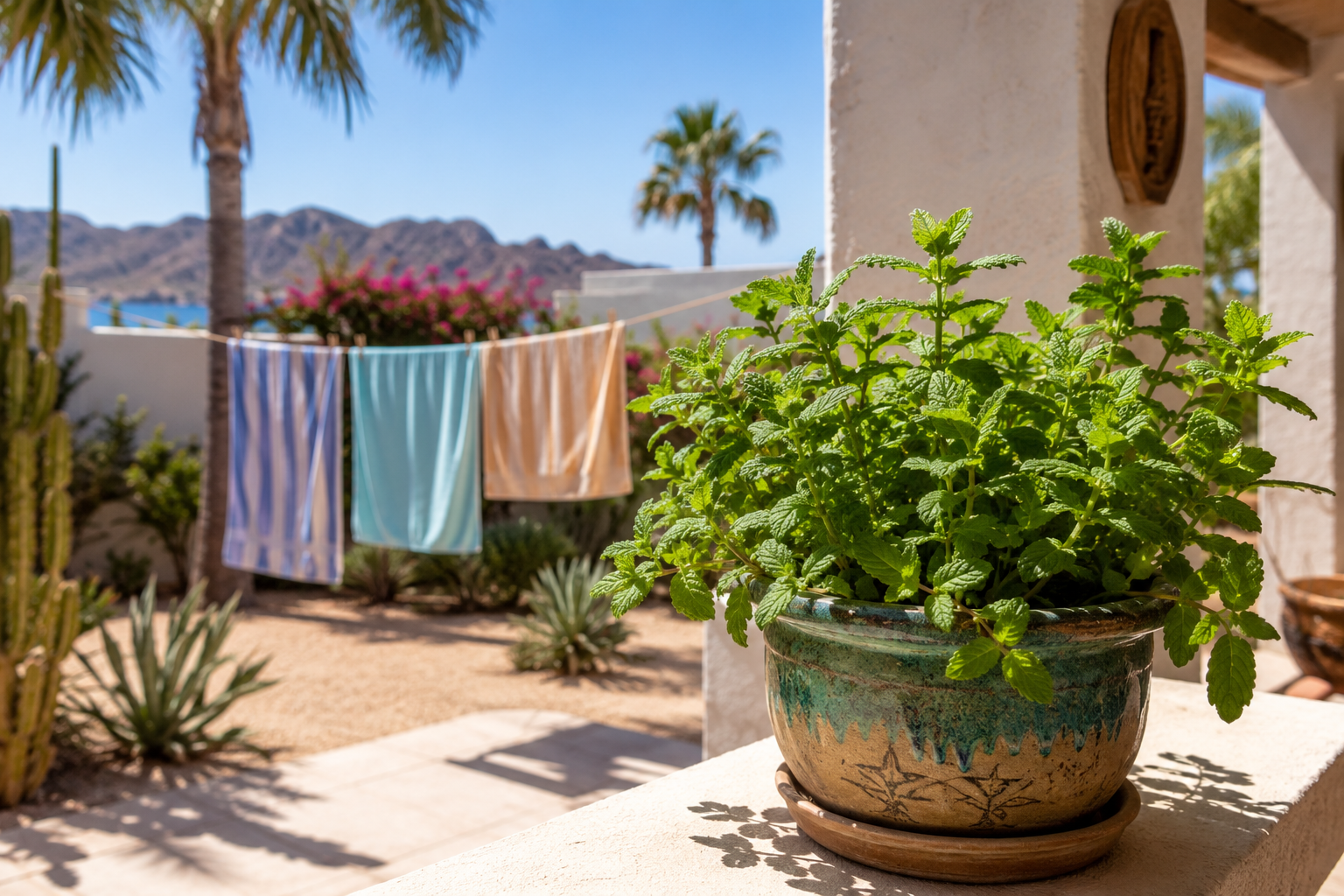
As I'm wrapping this up, there's a pot of mint growing beside my patio. I've become a much better gardener since moving to Baja, (the trick is watching the sun travel across the spaces where the plants live) and I have given this plant an unfair advantage. Every night, the condensation from one of the mini-splits trickles into the planter. The same air conditioner that keeps the house comfortable quietly waters tomorrow's mojito.
In a little while, I'll pick a few leaves, make one, grab my book, and put on Miles Davis' It Never Entered My Mind. The breeze will still be moving through the patio. The house will be cool inside. Somewhere across the bay, someone will be finishing a paddleboard as the last light slips behind the mountains.
Maybe that's the real answer to the question. Summer in La Paz isn't nearly as much about the heat as it is about the life you build around it.