La Paz, Mexico: The Most Underrated City for US and Canadian Expats in 2026
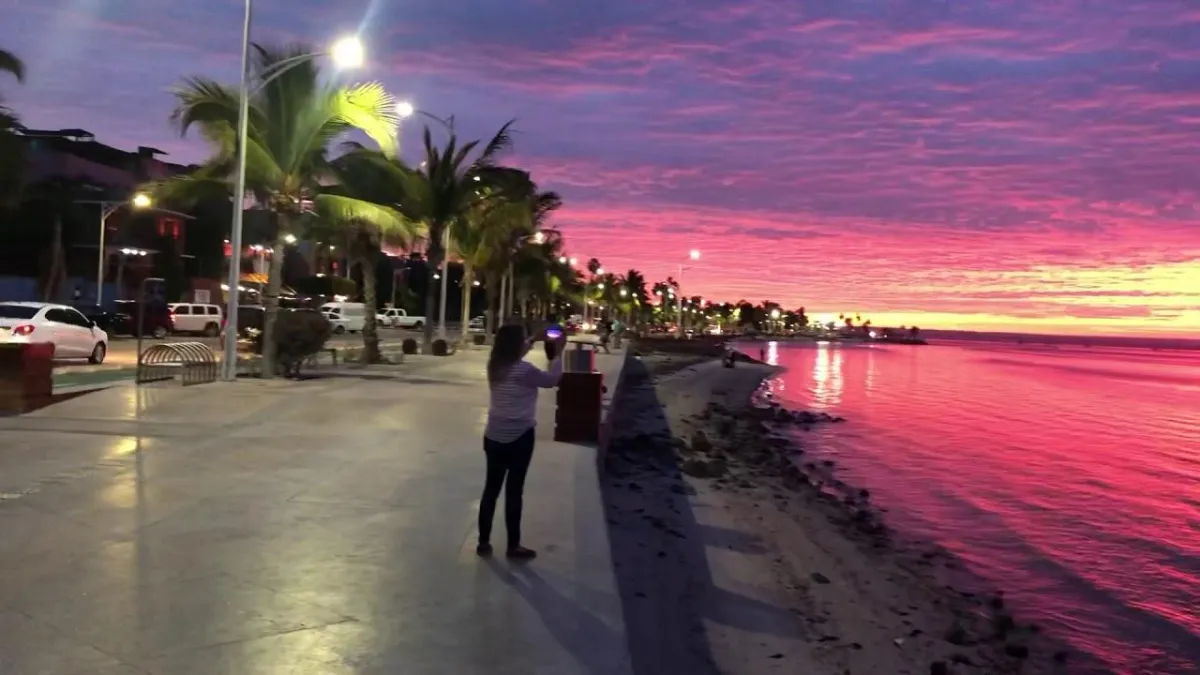
The first morning I walked the Malecón, a pelican landed four feet from me and completely ignored my existence. That's La Paz. The fishermen were already on their second coffee, their boats bobbing in water so still it looked painted. The sea was this impossible shade of blue-green that doesn't have a proper name in English. A woman jogged past with a dog the size of a small horse. A taco stand was already doing business at seven in the morning. I stood there for a while, just watching, and thought: I could live here.
Six years later, I do.
I'm writing this for the people who are where I was — sitting somewhere cold, or expensive, or both, with a browser full of tabs about Mexico, wondering if any of it is actually real. You've watched the YouTube videos. You've lurked in the Facebook groups. You've told yourself you'd look into it more seriously after the holidays, after the kids leave, after you finish this project at work. I get it. I was you.
So let me tell you about La Paz. Not the glossy version. The real one.
La Paz doesn't get the press that Cabo San Lucas gets. It doesn't have the Instagram saturation of Tulum or the expat infrastructure of Puerto Vallarta. It's the capital of Baja California Sur, a genuine Mexican city of about 250,000 people, and most Americans or Canadians couldn't find it on a map. That is, in my view, precisely what makes it extraordinary. The tourists who land at Los Cabos International and pile onto buses headed south — they're not coming here. La Paz has managed to remain, against all odds, a real place. A place where Mexicans actually live, where there's a working port and a naval base and a university, where the Malecón fills up on Sunday evenings with families eating elotes and kids on bicycles, where the pace of life is shaped by the sea rather than by tourism's demands.
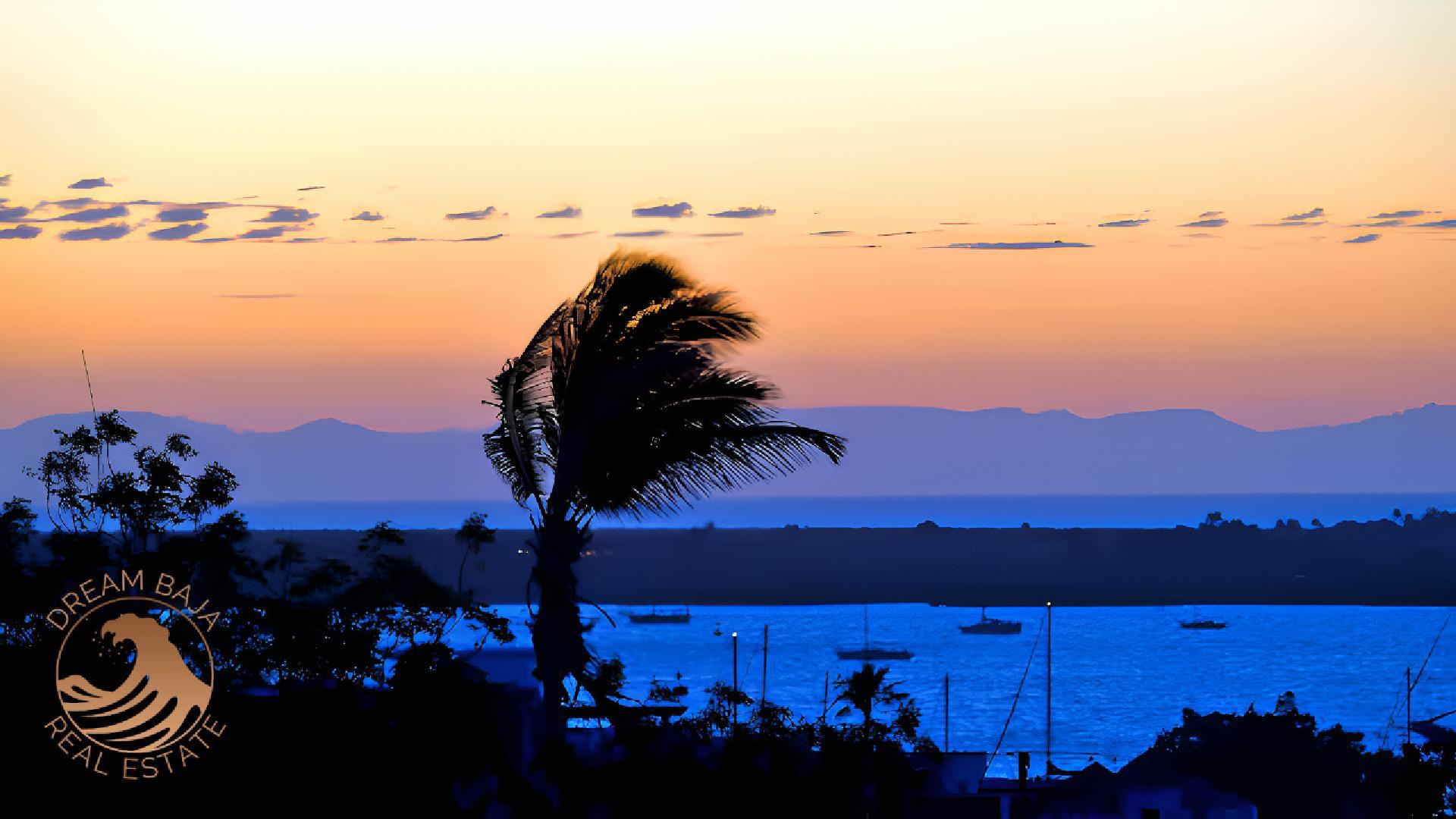
Come for the sunsets. Stay because your cost of living dropped by forty percent and you've never felt more alive.
Let me start with what surprises people most: the weather. Everyone knows Baja is hot, and yes, summers are warm — July and August will push into the mid-nineties Fahrenheit, and humidity creeps up when the occasional tropical storm passes through. But from October through May, the weather here is something close to perfection. Seventy-five degrees, low humidity, blue skies, a light breeze off the Sea of Cortez. Winters that would make a Phoenix snowbird weep with gratitude. The rainy season is short and usually dramatic in the best way — a few hours of downpour and then back to sunshine. People who grew up in the Pacific Northwest or the Canadian prairies and come to La Paz in February tend to look slightly dazed, like they've just been let out of solitary confinement.
Now let's talk about money, because that's ultimately what makes or breaks the question for most people.
A comfortable life in La Paz for a couple — not a budget backpacker existence, but a genuinely comfortable life with a nice rental, good food, the occasional dinner out, travel within Mexico, and a buffer for healthcare and emergencies — runs somewhere between $2,000 and $3,000 USD per month. Some couples do it comfortably on less. If you're bringing a meaningful retirement income or a remote work salary, you will feel, possibly for the first time in your adult life, like you have room to breathe.
Rent is the biggest variable. A furnished two-bedroom apartment in a nice part of town — say, near the Malecón or in the residential neighborhoods behind the centro — runs anywhere from $900 to $1,500 USD per month, depending on the building, the views, and whether it has a pool. If you're willing to live slightly further from the waterfront, you can do significantly better than that. I know people renting lovely homes for $800 a month. I also know people paying $2,800 for something genuinely spectacular with rooftop terraces and water views. The market has a range, and it rewards people who take time to look.
Groceries are a genuine pleasure here. The local mercados sell the freshest produce I've ever cooked with in my life — mangoes, avocados, tomatoes, limes, all at prices that feel absurdly low by US or Canadian standards. A week of groceries for two people, cooking at home most nights, runs us maybe $80 to $100 USD. The fish markets deserve their own paragraph: yellowtail, dorado, shrimp pulled out of the Sea of Cortez that morning. If you enjoy cooking, La Paz will make you a better cook simply by improving your raw materials.
Eating out is one of the great pleasures of life here. A proper sit-down meal for two at a solid local restaurant — the kind of place that's been around for twenty years and where the owner comes out to chat — runs maybe $40 to $60 USD with drinks. There are nicer places, places with wine lists and ocean views, where you might spend $60 or $120 for a special evening. And then there's the taco situation, which I want to address with appropriate seriousness: for about $8 to $12 USD, you can eat some of the best tacos of your life at any number of stands around town. The fish tacos here, specifically, are not to be casually compared to what you've had before. They are a different category of experience.
Utilities run low — electricity, water, internet, and gas will typically cost a couple somewhere between $100 and $200 per month depending on how heavily you use air conditioning in summer. Internet speeds have improved substantially and are entirely adequate for remote work. I run my entire business from our office here on a $499 peso plan without issue. The city has good cell coverage and multiple reliable providers.
Healthcare is worth discussing honestly because it's one of the questions I get most often. La Paz has a decent public hospital system and a handful of solid private clinics and specialists. Most expats here use private healthcare, which costs a fraction of what equivalent care would run in the United States. A doctor's visit at a private clinic might run $30 to $50 USD. Dental work is excellent and typically costs somewhere between a third and half of US prices. For anything truly serious, you're looking at a short flight to Los Angeles or Houston — a trade-off that most people who've done the math on US healthcare costs find entirely acceptable. Many expats carry international health insurance for major emergencies; premiums for a healthy fifty-five-year-old run far less than what most Americans pay for coverage at home.
But I want to step back from the spreadsheet for a moment, because none of those numbers tell you what it actually feels like to live here, and that's the part that matters most.
La Paz is a city built around the sea. The Malecón — the waterfront promenade — runs for several kilometers along the edge of the bay, and it is the living room of this city. People walk it in the mornings with coffee. Kids ride bikes on it in the afternoons. Couples sit on the benches in the evenings watching the sun go down over the mountains across the water. On weekends it's full of families, street food, music. It's the most democratic public space I've ever lived near — everyone uses it, all ages, all backgrounds, morning to night. I walk it most mornings and it never gets old.
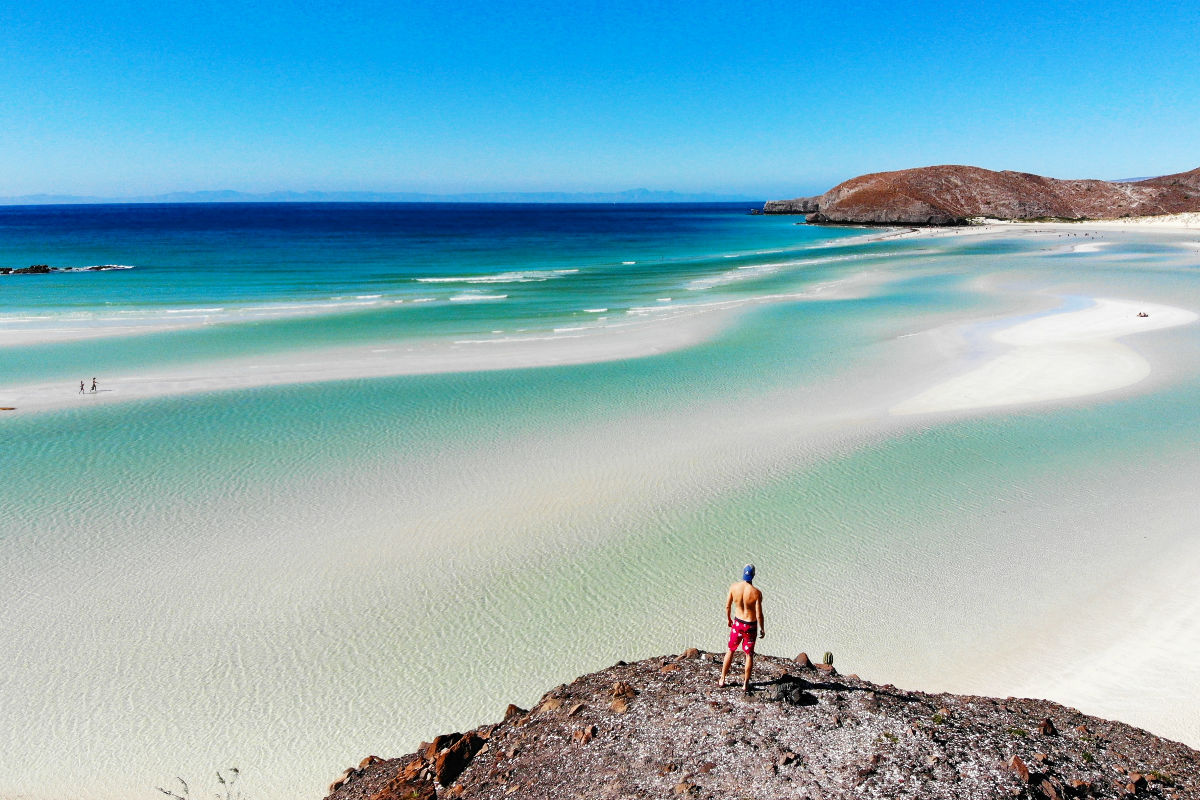
The sea itself is extraordinary. The Sea of Cortez — which Jacques Cousteau famously called the aquarium of the world — is right there. You can be snorkeling with sea lions within forty-five minutes of your front door. Whale sharks congregate in the bay seasonally and it's possible to swim with them in a way that is supervised and responsible and will rearrange your sense of what's remarkable about this planet. Humpback whales pass through. Manta rays glide under your kayak. The diving is world-class. The fishing is legendary. And for people who just want to get on a boat and float in warm, clear water on a Tuesday afternoon, that option also very much exists.

The culture of La Paz rewards people who engage with it. This is not a resort town where locals and expats exist in separate orbits. The city has a thriving arts scene, good live music venues, a genuine restaurant culture that's driven by local chefs and locally caught ingredients, a university that brings energy and young people, neighborhood festivals throughout the year, a weekly artisan market, and a food scene that's been quietly evolving for years into something genuinely interesting. My Spanish was middling when I arrived. Two years later it's significantly better, simply from the daily practice of living here. The city has been patient with me in that regard.
The expat community here is not enormous, and I say that as a feature rather than a bug. La Paz attracts a particular kind of person — curious, independent, interested in actually being in Mexico rather than building a replica of their home country with better weather. The people I've met here are divers and kayakers and artists and retirees who spent their careers in law or medicine or education, remote workers who decided the San Francisco rent made no sense anymore, couples who sold the house and wanted to try something different before they were too old to try anything. They're interesting. They're not all the same. There are enough of them that you won't feel isolated, and few enough that it doesn't feel like a bubble.
There are good Spanish-language schools if you want structure. There are hiking and kayaking clubs. There's a vibrant pickleball community, if that's your thing — and in La Paz, it very much is a thing. There are yoga studios and a CrossFit box and a farmers market and multiple community events throughout the year. The social infrastructure is there if you're willing to show up and participate.
Now I want to talk about something that a lot of blogs in this space avoid, which is safety. You deserve an honest answer on this rather than a cheerful sidestep.
Baja California Sur is consistently one of the safer states in Mexico. La Paz in particular is a working capital city with a low violent crime rate — considerably lower, in fact, than many mid-sized American cities. This is not spin; it's what the data shows. The US State Department's travel advisory for Baja California Sur is worth reading in full and in context, and I'd encourage you to do that rather than simply reacting to a headline. The advisory levels that apply to border regions and certain other Mexican states do not apply here in the same way. The expats I know in La Paz — people who've been here for five, ten, fifteen years — are not living in fear. They're living their lives. They take the same sensible precautions you'd take anywhere: they don't flash expensive jewelry, they're aware of their surroundings at night, they use common sense. The same common sense, frankly, that keeps you safe in any city you've ever lived in.
I will not tell you Mexico has no problems. It does, like every country. But the picture of Mexico that most North Americans carry around in their heads — assembled from headlines and cable news and other people's fear — is not the picture of La Paz. It's simply not the same place.
Can foreigners buy property here? Yes. This comes up constantly and it's worth addressing briefly even though it deserves its own article. Foreign nationals can own property in Mexico through a legal mechanism called a fideicomiso, which is essentially a bank trust. Through this structure you hold full beneficial rights to your property — you can sell it, rent it, renovate it, pass it on to your heirs. The Mexican government has not been in the business of seizing foreign-owned properties through these structures...in fact, if a situation arose where the Mexican equivalent of "eminent domain" occurred (a road needed to pass through the property, for example), they'd have to pay the homeowner fair market value for the property. Tens of thousands of North Americans own property in Mexico through this mechanism right now. The key is working with a properly licensed real estate agent (and a member of AMPI) — and I want to be direct here, because it matters: licensing is not mandatory for real estate agents in Mexico the way it is in the US and Canada, which means the industry is full of people operating without the formal training and legal accountability that you'd expect at home. This is one of the reasons choosing who you work with deserves real attention.
What La Paz is not: it's not Cancún. It's not a spring break destination. It's not trying to be Cabo. It doesn't have a Hard Rock Café. The nightlife is pleasant and genuine rather than produced for tourists. The beaches near town are calm and local rather than resort-developed. If you're looking for swim-up bars and swim-up bars alone, this is probably not your city.
But if you're looking for a place that has figured out how to be genuinely livable — beautiful, affordable, warm in all the ways that word means — then La Paz deserves a serious look.
I moved here because I fell in love with the water and the light and the pace of things. I stay because it has exceeded every expectation I came with. My mornings are better here. My food is better here. My stress levels are lower here. I spend more time outside, more time in the water, more time with people I've come to care about, and less time sitting in traffic thinking about my bills.
That's not a small thing. That's actually the whole thing.
If you're at the stage where La Paz is starting to feel less like a dream and more like a plan, I'd encourage you to come and see it for yourself. Spend a week. Walk the Malecón every morning. Eat the fish tacos. Watch the sunset from the waterfront. Talk to the people who live here. You'll know pretty quickly whether it's for you.
Most people who do that leave with a very different question than the one they arrived with. They stop asking whether La Paz is worth considering and start asking themselves why it took them so long to come.
I was exactly one of those people.
Come down. The pelicans will ignore you. The coffee is good. The water is perfect. There's room for you here.
Some current La Paz property listings: