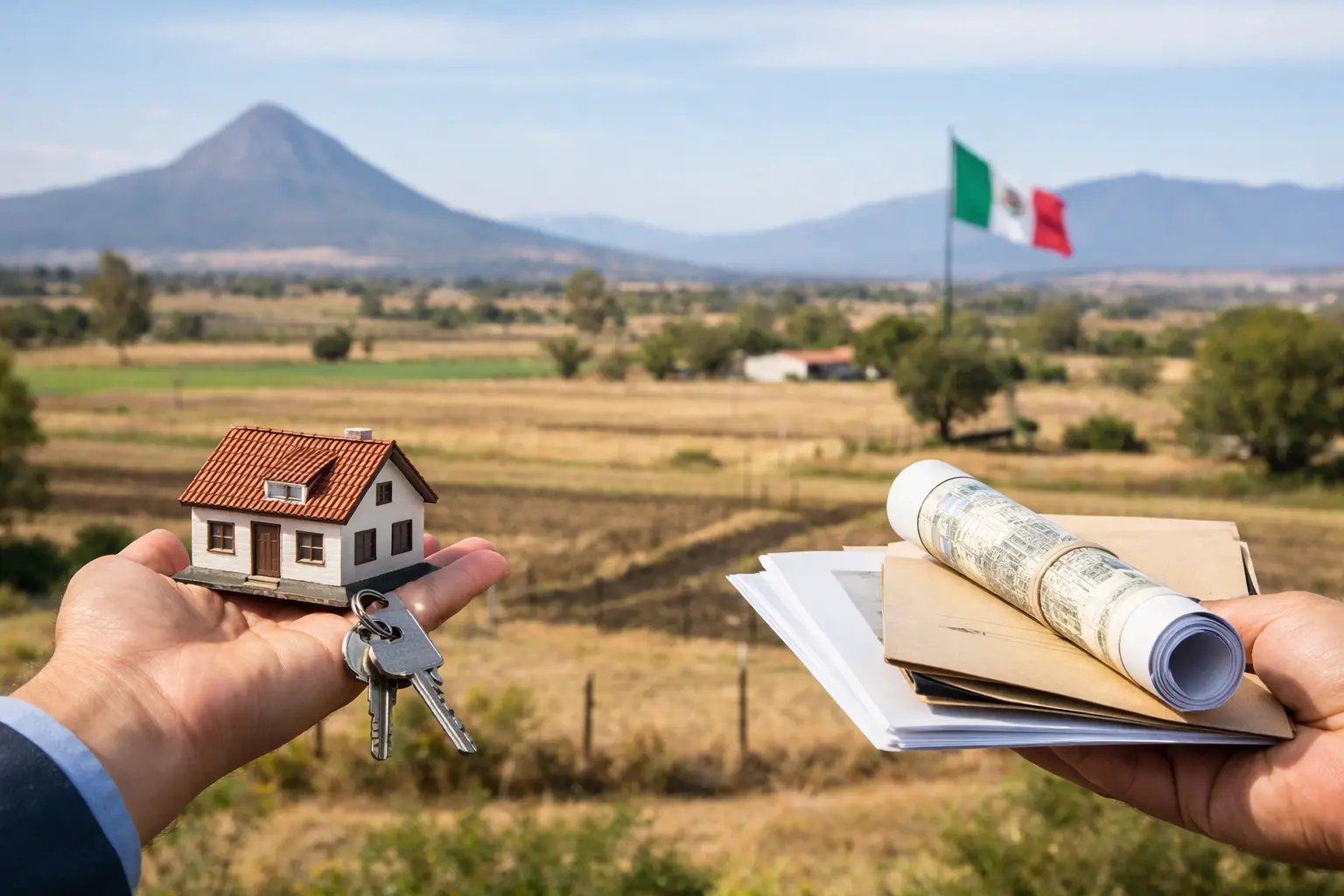
Can Foreigners Buy Ejido Land in Mexico?
A beautiful parcel with ocean views can look like the deal of a lifetime - until you learn it is ejido land. For many international buyers, the question is simple: can foreigners buy ejido land in Mexico? The short answer is no, not in the same way you can buy private titled property, and treating ejido land like a normal real estate purchase can create serious legal and financial risk.
That distinction matters even more in Baja California Sur, where desirable land near the coast, in growing communities, or on the edge of development areas can sometimes be marketed casually, long before buyers understand what they are actually being offered. If your goal is to live the dream in Baja, invest wisely, or secure land for future development, knowing the difference between ejido land and private property is not optional.
What ejido land actually is
Ejido land is a form of communal land tenure created through Mexico's agrarian system. It was originally intended for agricultural and community use, with rights held by members of the ejido, known as ejidatarios. These members may have rights to use or occupy parcels, but those rights are not automatically the same as fee simple ownership of privately titled real estate.
This is where foreign buyers can get into trouble. A parcel may be shown, fenced, occupied, or even sold through private agreements, but that does not mean it has completed the legal process necessary to become private property. In everyday conversation, people may say a seller "owns" the land. Legally, that can be a very different story.
Can foreigners buy ejido land legally?
Foreigners generally cannot directly purchase ejido land as ejido land. To be bought and sold like standard real estate, the parcel must first go through a formal process to leave the ejido regime and become private property. Only once that process is properly completed, documented, and recorded can a foreign buyer consider purchasing it through the lawful structures available in Mexico.
For foreign nationals, that usually means buying titled property either directly outside the restricted zone rules that apply near the coast and borders, or through a bank trust called a fideicomiso within the restricted zone. Much of the Baja market that interests second-home buyers, retirees, and investors falls within that coastal restricted zone, so the trust structure is common. But a fideicomiso does not solve an ejido problem. If the land is still ejido, the trust is not the issue - title is.
Why buyers get confused
The confusion usually starts with price. Ejido parcels are often marketed below comparable titled land, which makes them attractive to buyers looking for a home site, a spec play, or a development opportunity. Sellers or intermediaries may also say things like, "everyone buys this way," or "the title will be cleaned up later." That kind of language should stop a buyer in their tracks.
The real issue is not whether someone has possession of the land today. The issue is whether the parcel has completed the legal steps required for domain pleno, subdivision if needed, municipal approvals if applicable, and registration as private property. Until that happens, what looks like a bargain may really be a bet on a legal process you do not control.
The real risks of trying to buy ejido land
Some buyers assume risk is manageable if they sign a private contract, pay cash, or rely on local relationships. That may feel practical in the moment, but it creates exposure that can be very expensive later.
One risk is that the person selling the parcel may not have full authority to transfer rights in the way they claim. Another is that the ejido assembly may not have approved the transaction or may challenge it later. Boundaries can also be uncertain, surveys may not align with official records, and infrastructure promises may never materialize.
There is also the financing and resale problem. Most serious buyers, lenders, title insurers, and sophisticated investors want clear, transferable title. If you buy into a gray-area arrangement, you may find it difficult or impossible to refinance, build legally, obtain permits, or resell the property to a qualified future buyer. What saves money upfront can limit value on the back end.
When ejido land can become purchasable
Ejido land is not automatically off the table forever. In some cases, land can be regularized and converted into private property through a legal process. Once that happens correctly, it may become eligible for a standard sale.
The key phrase there is correctly. Buyers should not rely on verbal assurances that a parcel is "almost titled." You need documented proof that the parcel has completed its transition out of ejido status and that the resulting private title is properly recorded. That means reviewing the chain of title, the property registry records, cadastral information, and the supporting legal documents with professionals who understand this niche.
If you are looking at land in an emerging area of Baja, this is where patience pays off. Sometimes the better move is to wait until the property is fully regularized, even if the price rises. Paying more for clarity is often far less expensive than paying less for uncertainty.
How to evaluate a parcel without stepping into a legal mess
If a property is described as ejido, formerly ejido, agrarian, communal, or "in process," slow the conversation down. Ask what the current legal status is today, not what it may become later. Request the title documents, registry information, survey, tax records, and any evidence of conversion to private property.
Just as important, work with professionals who know the difference between marketable land and land that only appears marketable. In Baja, that usually means a qualified real estate advisor, a notario involved at the proper stage, and an attorney with real experience in Mexican real estate and agrarian matters. This is not the place for assumptions or informal shortcuts.
For many foreign buyers, the safest question is not "Can I get this land?" but "Will I be able to own, use, build on, finance, and resell this land with confidence five years from now?" That mindset leads to better decisions.
Can foreigners buy ejido land if they use a Mexican corporation?
This is another common question, especially among investors looking at larger parcels or commercial opportunities. A Mexican corporation can be useful in certain real estate acquisitions, depending on the property's use and location. But it does not magically convert ejido land into titled private property.
If the land remains under ejido status, the core legal issue is still there. The ownership vehicle does not cure a defective or incomplete title situation. A corporation may be part of a broader acquisition strategy once the land is properly regularized, but it should never be treated as a shortcut around agrarian law.
What this means for Baja buyers
In markets like La Paz, Todos Santos, La Ventana, and the East Cape, buyers are often balancing emotion and opportunity. You can picture the home, the rental potential, the sunset view, the future appreciation. That excitement is part of why people embrace Baja. But the right property should give you both lifestyle upside and legal certainty.
This is especially true if you are planning to build, relocate, or hold the property as part of a long-term investment strategy. Clean title is not just a legal checkbox. It affects construction timing, utility connections, resale liquidity, inheritance planning, and peace of mind.
At Dream Baja Realty, this is exactly why education comes first. Buyers need more than listings - they need context, straight answers, and guidance that protects both the dream and the investment.
The smarter path for foreign buyers
If you are new to Mexico real estate, the safest route is usually straightforward: focus on properly titled property, confirm the legal structure that applies to foreign ownership, and verify everything before money changes hands. If a parcel has an ejido history, treat that as a signal for deeper review, not automatic rejection, but definitely not blind trust.
There are times when a formerly ejido parcel becomes a valid opportunity. There are also times when the risk, delays, and uncertainty simply are not worth it. The difference comes down to documentation, due diligence, and the quality of the team advising you.
Baja offers extraordinary opportunities for living, investing, and building a life by the sea. The best purchases are the ones that still feel good after the legal review is finished.